
What a class IIa device means under the EU MDR
A class 2a medical device, officially written in the EU system as a Class IIa medical device, is a medium-risk product under Regulation (EU) 2017/745 on medical devices. It sits above Class I and below Class IIb and Class III. The practical consequence is significant: a standard Class IIa device normally cannot obtain CE marking through manufacturer self-declaration alone. A notified body must be involved in the conformity assessment, and the manufacturer must maintain technical documentation, clinical evaluation, post-market surveillance and a quality management system that fit the device’s intended purpose and risk profile.
This article focuses on the EU Medical Device Regulation, not the U.S. FDA device class system. It reflects public regulatory information available as of October 2026, including Regulation (EU) 2017/745, MDCG 2021-24 Rev.1 on classification of medical devices issued in April 2026, Regulation (EU) 2023/607 on MDR transitional provisions, and the European Commission’s EUDAMED timing notice published in November 2025. For more regulatory explainers, see our Regulatory section.

How EU MDR classification is determined
EU MDR classification starts with the manufacturer’s intended purpose. The same technology can fall into different classes when its clinical claims, duration of use, invasiveness, user group or mode of action changes. A wound dressing promoted only as a mechanical barrier may not be treated in the same way as a dressing intended to manage the wound micro-environment. A software tool that only stores data is assessed differently from software that provides information for a diagnostic or therapeutic decision.
Article 51 of the MDR divides medical devices into Classes I, IIa, IIb and III according to intended purpose and inherent risk. Annex VIII contains the classification rules. The main classification questions usually include:
- Duration of contact: transient use is generally less than 60 minutes, short-term use is generally continuous use between 60 minutes and 30 days, and long-term use is generally more than 30 days.
- Invasiveness: the MDR distinguishes non-invasive devices, devices invasive through body orifices, surgically invasive devices and implantable devices.
- Active function: powered devices that administer energy, monitor physiological parameters or influence treatment can move into Class IIa or higher depending on the risk involved.
- Software role: Rule 11 considers whether medical device software provides information for diagnostic or therapeutic decisions and how serious the possible consequences of those decisions are.
- Special rules: rules for substances, disinfection, contraception, nanomaterials, medicinal substances and tissues can override a simple classification assumption.
Where more than one rule could apply, the stricter rule leading to the higher class is normally applied. Classification therefore needs to be documented as a reasoned regulatory conclusion, not copied from a similar product or a competitor’s label.
Common routes that can lead to Class IIa
Class IIa is not a product category; it is a risk class. The following table summarizes common situations that may lead to Class IIa classification under the MDR and MDCG 2021-24 Rev.1. These examples are useful for orientation, but the final class still depends on the exact intended purpose, claims and design.
| Device situation | Why Class IIa may apply | Examples commonly discussed in guidance |
|---|---|---|
| Devices for injured skin or mucous membrane | Rule 4 can classify devices as Class IIa when they are principally intended to manage the micro-environment of injured skin or mucous membrane. | Hydrogel dressings, non-medicated impregnated gauze dressings and polymer film dressings when the intended purpose supports Class IIa treatment. |
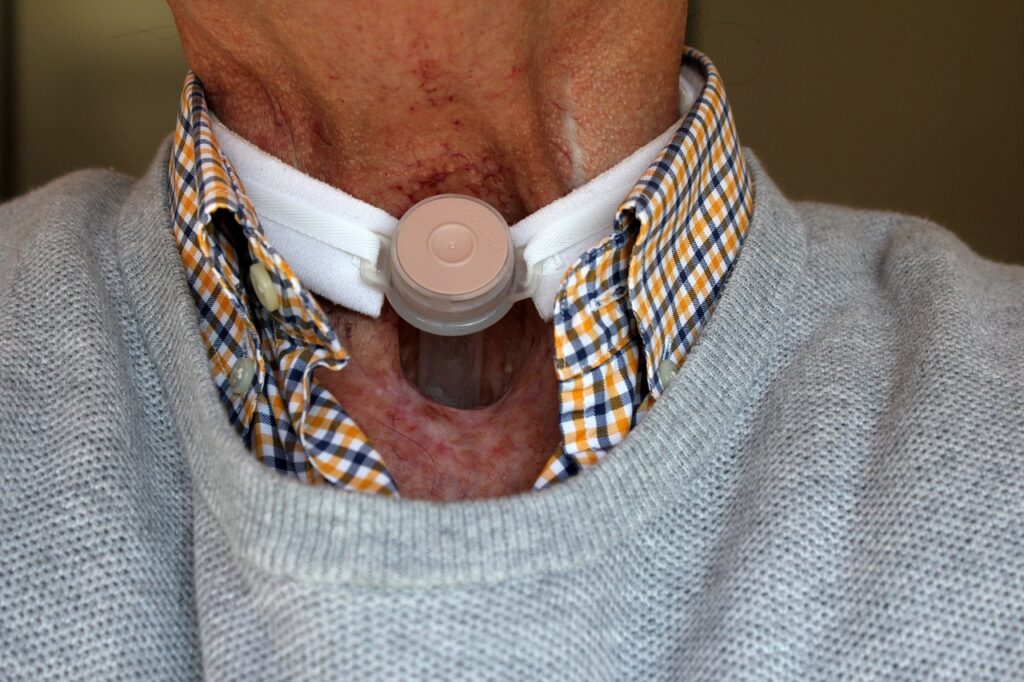
| Devices invasive through a body orifice | Rule 5 may lead to Class IIa for certain short-term devices or devices connected to a Class IIa or higher active device. | Short-term corrective contact lenses, tracheal tubes, indwelling urinary catheters for short-term use, suction tubes and certain endoscope-related devices. |
| Surgically invasive devices for transient use | Rule 6 generally places surgically invasive transient-use devices in Class IIa unless an exception pushes them to Class I, IIb or III. | Needles for suturing, syringes, lancets, single-use scalpel blades, surgical gloves and certain catheters outside the central circulatory system. |
| Active therapeutic or diagnostic devices | Rules for active devices may classify a product as Class IIa when it administers energy, monitors physiological functions or supports diagnosis without the higher-risk features that move it to IIb or III. | Some active devices for therapy, diagnosis or physiological monitoring, depending on whether failure could cause immediate danger or serious deterioration. |
| Medical device software | Rule 11 can place software in Class IIa when it provides information used for diagnostic or therapeutic decisions, unless the decision impact raises the class. | Decision-support software for diagnosis or therapy where the potential consequence does not meet the higher thresholds for Class IIb or III. |
The table also highlights a common issue in classification work: Class IIa is often reached because of a specific use case, not because of how the product looks. A catheter, dressing or software application can change class when claims, contact duration, patient population or clinical workflow change.
Conformity assessment and CE marking for Class IIa
For standard Class IIa devices, the MDR requires notified body involvement. Article 52(6) states that manufacturers of Class IIa devices, other than custom-made or investigational devices, are subject to conformity assessment under Annex IX Chapters I and III, including technical documentation assessment for at least one representative device for each category of devices. Other conformity assessment routes may be available under the MDR, but Annex IX is commonly used because it combines quality management system assessment with technical documentation review.
This has several practical implications. The manufacturer needs a quality management system before the notified body audit and certificate decision. The technical documentation also has to be ready as a coherent file; it must show how the device meets the general safety and performance requirements in Annex I. The notified body will not necessarily review every model at the same depth before certification, but it will use a sampling approach for representative technical documentation and continue surveillance after certification.
After a successful conformity assessment, the manufacturer draws up the EU declaration of conformity and affixes the CE marking. Where a notified body is involved, the CE mark is accompanied by the notified body’s identification number. This is one visible difference between many Class I self-declared devices and Class IIa devices placed on the EU market.
Documentation and evidence expected for a Class IIa file
A Class IIa submission is not simply a form supported by test reports. The technical file should connect claims, design inputs, risks, verification, validation, clinical evidence and post-market controls. Regulators and notified bodies generally expect the evidence trail to be traceable from intended purpose through to residual risk.
A practical Class IIa evidence package usually includes:
- Classification rationale: a documented Annex VIII rule-by-rule analysis explaining why Class IIa applies and why higher rules do not apply.
- General safety and performance requirements checklist: an Annex I mapping that identifies applicable requirements, standards, tests, design controls and justifications for non-applicable items.
- Technical documentation: Annex II documentation covering device description, variants, accessories, specifications, manufacturing information, design verification and validation, labeling and instructions for use.
- Post-market surveillance documentation: Annex III documentation covering PMS planning, data sources, responsibilities and links to corrective and preventive action.
- Risk management: hazard identification, risk control measures, residual risk evaluation, benefit-risk rationale and verification that controls are effective.
- Clinical evaluation: an MDR clinical evaluation showing that clinical evidence supports the intended purpose, performance claims and safety profile. A clinical investigation may be needed if existing clinical data are insufficient.
- PMCF planning or justification: post-market clinical follow-up should be planned unless a reasoned justification explains why it is not required.
- PSUR process: Class IIa devices require a periodic safety update report, updated when necessary and at least every two years.
- UDI, labeling and registration controls: the file should align UDI assignment, labeling, instructions for use, EUDAMED registration steps and economic operator information.
Standards such as ISO 13485 are commonly used to structure quality systems, but the legal obligation is to satisfy the MDR. A standard can support conformity; it does not replace the MDR analysis.
Transition timing and 2026 regulatory context
For new Class IIa devices, manufacturers should plan for MDR certification before placing the device on the EU market. For legacy devices that previously relied on certificates under the Medical Devices Directive, Regulation (EU) 2023/607 extended certain transition periods. For Class IIa legacy devices, the key end date is 31 December 2028, but only if the conditions are met.
Those conditions are substantive. The device must continue to comply with the former directive, must not undergo significant changes in design or intended purpose, and must not present an unacceptable risk to patients, users or public health. The manufacturer also needed to have a quality management system in place by 26 May 2024, lodge a formal application with a notified body by 26 May 2024, and sign a written agreement with the notified body by 26 September 2024. Missing those conditions can remove the benefit of the extended transition period. See also: Implants.
EUDAMED also became more operationally important in 2026. Following the Commission Decision published in the Official Journal on 27 November 2025, the first four EUDAMED modules became mandatory from 28 May 2026: Actor registration, UDI/Devices registration, Notified Bodies & Certificates, and Market Surveillance. Class IIa manufacturers should treat these modules as part of regulatory operations, not as a late administrative upload.
Common mistakes when planning a Class IIa device
The first mistake is using Class IIa as a shorthand for medium risk without documenting the rule. Notified bodies expect a defensible classification rationale that considers the actual intended purpose and all applicable rules.
The second mistake is assuming equivalence between jurisdictions. A product that is FDA Class II in the United States is not automatically Class IIa in Europe. The EU uses its own classification rules, conformity assessment routes and evidence expectations.
The third mistake is underestimating software. Under MDR Rule 11, software that informs diagnosis or treatment decisions may be Class IIa or higher even if it has no direct patient contact. Claims, decision impact and clinical context matter.
The fourth mistake is allowing marketing claims to move ahead of the evidence. A claim that a device actively supports healing, changes therapy decisions or monitors a critical parameter may change the class or increase the evidence burden. Regulatory, clinical and marketing teams should align before claims appear in labeling, websites or distributor materials.
The final mistake is treating post-market surveillance as a document created after launch. For Class IIa devices, PMS, vigilance, PMCF and PSUR planning should be built before certification because they show how the manufacturer will keep the benefit-risk profile current after market entry.
Frequently asked questions
Is Class 2a the same as Class IIa?
In EU regulatory writing, the correct notation is Class IIa. Searchers often type class 2a medical device, but manufacturers should use Class IIa in formal MDR documentation, declarations and notified body submissions.
Can a Class IIa device be self-certified?
For standard CE-marked devices, Class IIa normally requires notified body involvement. The manufacturer remains responsible for conformity, but the notified body assesses the quality management system and selected technical documentation according to the applicable conformity assessment route.
Is medical device software always Class IIa?
No. Software classification depends on intended purpose. Software that merely stores or displays data may not be a medical device in some situations. Software that informs diagnostic or therapeutic decisions can be Class IIa or higher under Rule 11, depending on the possible consequence of the decision.
Does every Class IIa device need a clinical investigation?
No. Every Class IIa device needs a clinical evaluation, but a clinical investigation is required only when existing clinical data are not sufficient to demonstrate conformity with the relevant safety and performance requirements.
What is the most important first step for a Class IIa project?
Define the intended purpose and claims with precision, then document the Annex VIII classification rationale. That decision drives the conformity assessment route, evidence plan, notified body discussion, labeling strategy and post-market obligations.