

Key answer for manufacturers
The Europe CE marking regulatory process for medical devices is a sequence of MDR decisions and evidence, not a single filing. Under Regulation (EU) 2017/745, the Medical Device Regulation or MDR, the manufacturer must confirm that the product is within scope, define its intended purpose, assign the correct risk class, prepare MDR-compliant technical documentation and quality system controls, complete the applicable conformity assessment route, issue an EU declaration of conformity, and then affix the CE mark. For most class IIa, IIb and III devices, and for some class I devices, a designated notified body must review the technical documentation, the quality management system, or both before CE marking. From 28 May 2026, use of the first four EUDAMED modules also became mandatory, so registration data, certificate data and internal ownership of those records are now part of market access planning.
This article is part of the Regulatory section and focuses on the practical sequence for manufacturers, especially teams comparing MDR planning, notified body expectations and legacy-device transition dates.
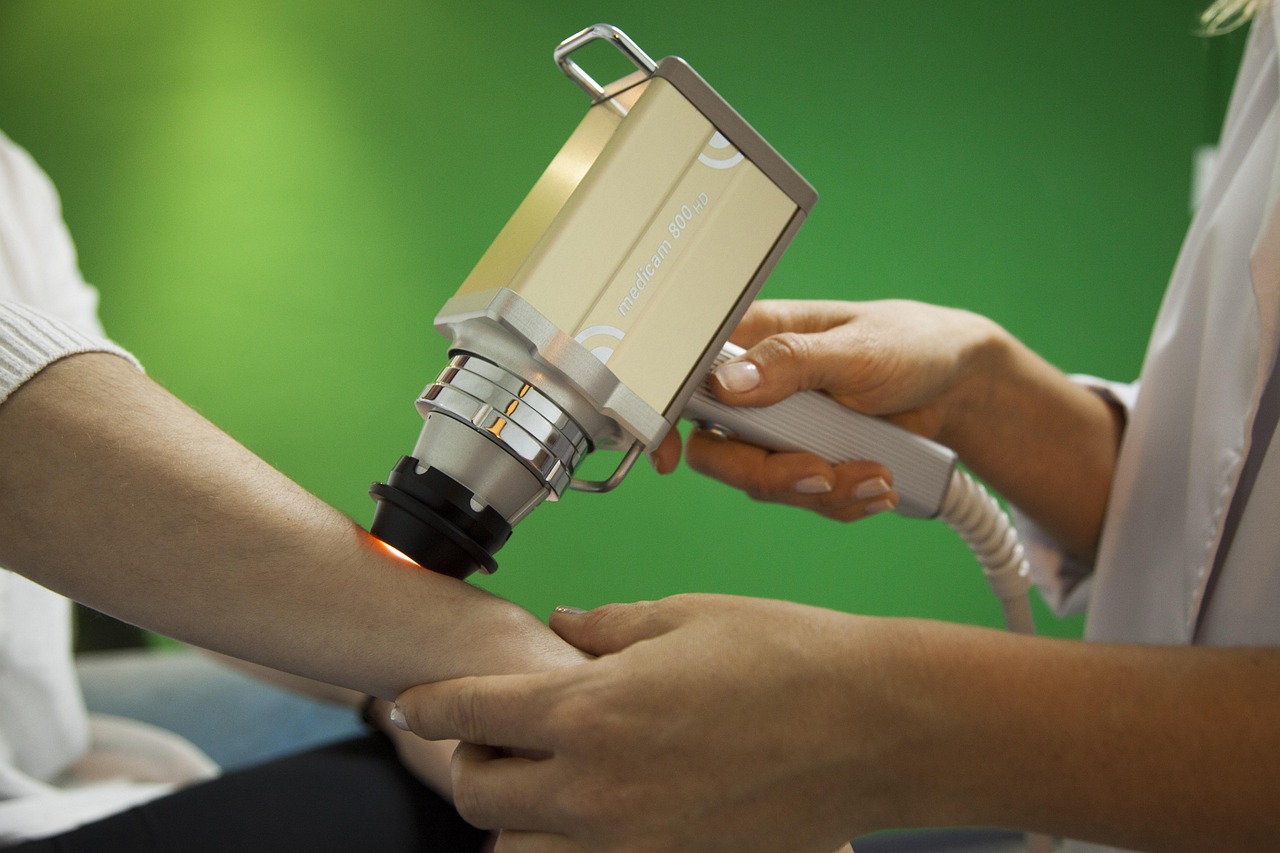
What CE marking means under the MDR
CE marking is the manufacturer’s visible indication that a device conforms to applicable EU requirements and may be placed on the EU market once all required steps have been completed. For medical devices, the central legal framework is the MDR, which has applied since 26 May 2021 and replaced the former Medical Devices Directive and Active Implantable Medical Devices Directive for new MDR conformity routes.
Three points are often confused. The CE mark is not a central EU agency approval. A notified body certificate is not required for every device, but it is required for many risk classes and device types. And CE marking is not the end of regulatory work: manufacturers must maintain post-market surveillance, vigilance, technical documentation and quality system controls throughout the device life cycle.
The MDR also raised expectations for clinical evaluation, post-market clinical follow-up, traceability, Unique Device Identification and economic operator responsibilities. In practice, CE marking should be managed as a product life-cycle process, not as a final label artwork task.
The core MDR CE marking sequence
A practical MDR plan usually follows a clear sequence. Some workstreams can run in parallel, but weak early decisions often lead to rework during conformity assessment.
- Confirm qualification and intended purpose. The intended medical purpose drives whether the product is a medical device, an accessory, a product without an intended medical purpose covered by Annex XVI, or outside MDR scope. Claims, indications, user population and mode of action must remain consistent across labeling, clinical evaluation and risk management.
- Assign the MDR risk class. Classification is determined under Annex VIII. The classes are I, IIa, IIb and III, with higher classes generally requiring deeper notified body scrutiny. The classification rationale should be documented in writing and should not be treated as a marketing choice.
- Identify economic operators. The manufacturer, authorized representative, importer and distributor each have MDR obligations. A manufacturer outside the EU must appoint an EU authorized representative before placing a device on the Union market.
- Build the quality management system. Article 10 requires manufacturers to establish and maintain a quality management system proportionate to the device risk class and type. The system should cover regulatory strategy, design controls, supplier controls, production, risk management, clinical evaluation, UDI, vigilance and post-market surveillance.
- Prepare technical documentation. MDR Annex II and Annex III documentation should demonstrate conformity with the general safety and performance requirements. Typical content includes device description, specifications, design and manufacturing information, benefit-risk analysis, verification and validation, clinical evaluation, labeling and post-market surveillance planning.
- Select the conformity assessment route. Depending on class and device type, the route may involve self-declaration or notified body assessment under the relevant MDR annexes. Where a notified body is needed, it must be designated for the device type and technology in scope.
- Complete assessment and certification where required. The notified body may review the quality system, technical documentation samples, clinical evidence and special processes. Findings must be resolved before certification.
- Issue the EU declaration of conformity and affix CE marking. Once conformity has been demonstrated, the manufacturer draws up the EU declaration of conformity and affixes the CE mark. If a notified body was involved, its identification number appears with the CE mark.
- Register and maintain post-market obligations. UDI assignment, EUDAMED registration, post-market surveillance, periodic safety update reports where applicable, vigilance reporting and field safety corrective actions must be maintained after market entry.
How risk class changes the route
The main operational question is whether the device needs notified body involvement. The table below summarizes the usual direction, but device-specific rules, exceptions and special product categories can change the route.
| Device category | Typical conformity route implication | Planning point |
|---|---|---|
| Class I, non-sterile and non-measuring | Manufacturer self-declaration is generally possible if no other special rule applies. | Technical documentation and PMS obligations still apply; self-declaration is not an exemption from MDR compliance. |
| Class I sterile, measuring or reusable surgical instruments | Notified body involvement is required for the relevant limited aspects, such as sterility, measuring function or reusable surgical instrument processing. | Define exactly which aspects the notified body must assess and keep evidence aligned with labeling and IFU claims. |
| Class IIa | Notified body involvement is required. | Expect review of the QMS and representative technical documentation, depending on the selected route. |
| Class IIb | Notified body involvement is required, with higher scrutiny than class IIa. | Implantable and higher-risk technologies need stronger clinical and risk evidence. |
| Class III | Notified body involvement is required and scrutiny is highest. | Clinical evaluation, PMCF strategy, risk controls and design evidence should be planned early. |
| Custom-made and investigational devices | Special MDR provisions apply instead of the standard mass-market CE route. | Do not assume the same labeling, certification or registration pathway as a series-produced CE-marked device. |
The classification decision should be revisited whenever the intended purpose, user group, technology, anatomical site, software function, invasiveness or duration of use changes. Under the MDR, a change that looks minor commercially can be significant from a regulatory perspective.
Documentation regulators and notified bodies expect
For MDR CE marking, the technical file is more than a product description. It is the evidence package showing that the device meets the general safety and performance requirements. Strong submissions make the logic easy to follow: intended purpose, classification, applicable requirements, standards or common specifications, verification evidence, clinical evidence, risk controls and post-market plans should all support the same device claims.
Key documentation areas usually include:
- Device description and specifications, including variants, accessories, configurations and Basic UDI-DI relationships.
- General safety and performance requirements checklist, showing how each applicable requirement is met.
- Risk management file, including hazard analysis, benefit-risk conclusions and links to design controls and labeling.
- Clinical evaluation report, supported by clinical data appropriate to the device type, claims and risk class.
- Verification and validation evidence, such as performance testing, electrical safety, software validation, usability engineering, sterilization validation, biocompatibility and packaging validation where relevant.
- Labeling and instructions for use, consistent with the intended purpose and risk controls.
- Post-market surveillance plan and, where required, PMCF plan, periodic safety update report procedures and vigilance procedures.
- Quality management system evidence, including design control, supplier management, production controls, complaint handling and CAPA.
Manufacturers often underestimate the link between clinical evaluation and the rest of the file. Clinical evidence should not be written only at the end as a narrative summary. It should inform risk acceptability, performance claims, PMCF needs and the post-market data collection strategy.
Transition deadlines and EUDAMED changes to watch
As of 14 October 2026, the MDR transition landscape includes several fixed dates that still matter for legacy devices. Regulation (EU) 2023/607 extended certain MDR transition periods, but only under conditions. The extension is not an automatic blanket permission for every device formerly certified under the directives.
| Date | Regulatory significance | Practical impact |
|---|---|---|
| 26 May 2021 | MDR became applicable for medical devices. | New MDR conformity routes apply; directive-based transition is limited to eligible legacy cases. |
| 26 May 2024 | Deadline for eligible legacy manufacturers to lodge a formal MDR conformity assessment application and have an MDR-compliant QMS in place. | This deadline has passed; manufacturers should not plan as if they can newly create eligibility after the fact. |
| 26 September 2024 | Deadline to sign the required written agreement with a notified body for eligible legacy devices. | Evidence of application and agreement is central to transition status. |
| 26 May 2026 | End of the special derogation route for certain class III custom-made implantable devices, subject to conditions. | Manufacturers should verify whether a notified body certificate is now required for continued placing on the market. |
| 28 May 2026 | Mandatory use began for the first four EUDAMED modules: actor registration, UDI/device registration, notified bodies and certificates, and market surveillance. | Registration planning, data ownership and certificate data checks became routine launch-readiness tasks. |
| 31 December 2027 | End of extended transition for higher-risk eligible legacy devices, including class III and certain class IIb implantable devices. | Manufacturers should treat remaining time as execution time, not strategy time. |
| 31 December 2028 | End of extended transition for other eligible devices, including many class IIb, class IIa and relevant class I devices requiring notified body involvement. | Portfolio prioritization remains important because notified body review capacity is not controlled by the manufacturer. |
The European Commission also proposed targeted MDR and IVDR simplification measures on 16 December 2025. A proposal is not binding law unless it is adopted through the EU legislative process. Manufacturers should therefore separate current legal obligations from possible future changes when preparing regulatory plans, board updates or launch timelines. See also: Implants.
Common bottlenecks in the CE marking process
The CE marking pathway often slows down for predictable reasons. The first is classification uncertainty. If the device is software, implantable, substance-based, invasive, reusable or connected to a medicinal product, early classification analysis is essential.
The second bottleneck is notified body availability and scope. A notified body must be designated for the relevant MDR codes and device technology. Manufacturers should not assume that an existing commercial relationship automatically covers a new device type or a changed intended purpose.
The third bottleneck is clinical evidence. Under the MDR, equivalence arguments, literature routes and post-market data strategies need careful justification. For higher-risk devices, weak clinical planning can delay the whole assessment even when bench testing and QMS evidence are strong.
The fourth bottleneck is inconsistent documentation. Notified body questions often arise when labeling, risk management, clinical evaluation and verification reports describe the device differently. A useful internal check is to compare the intended purpose, indications, contraindications and performance claims across every major document before submission.
Practical planning checklist
- Freeze the intended purpose before final classification and clinical strategy decisions.
- Document the MDR classification rule and rationale, including why other plausible rules do not apply.
- Confirm whether notified body involvement is required and whether the selected body is designated for the device scope.
- Build the GSPR checklist early and use it as the index for evidence planning.
- Connect risk management outputs to verification, validation, labeling and PMS activities.
- Plan clinical evaluation and PMCF before the submission is assembled, not after notified body questions arrive.
- Assign UDI and EUDAMED responsibilities to named functions, including data maintenance after launch.
- For legacy devices, verify transition eligibility using dated evidence rather than assumptions based on old certificates.
- Keep the EU declaration of conformity, certificates and technical documentation aligned after every design or labeling change.
Frequently asked questions
Can all medical devices be self-certified for CE marking in Europe?
No. Self-declaration is generally available only for class I devices that do not require notified body involvement. Sterile class I devices, class I devices with a measuring function, class I reusable surgical instruments and higher-risk classes require notified body involvement for the applicable scope.
Does an ISO 13485 certificate automatically grant CE marking?
No. ISO 13485 certification can support a quality management system, but CE marking under the MDR requires conformity with MDR obligations, technical documentation, clinical evaluation, post-market surveillance and the correct conformity assessment route. For many devices, a notified body must issue MDR certification before CE marking can proceed.
What is the difference between a notified body certificate and an EU declaration of conformity?
A notified body certificate is issued by the notified body after a successful assessment where such involvement is required. The EU declaration of conformity is issued by the manufacturer and states that the device complies with the MDR and other applicable EU legislation. For devices requiring notified body involvement, both are part of the CE marking evidence chain.
Do non-EU manufacturers need an authorized representative?
Yes. A manufacturer without a registered place of business in the EU must designate an EU authorized representative. The authorized representative has defined MDR responsibilities and should have access to the required documentation under the written mandate.
Is CE marking finished once the product is launched?
No. After placing a device on the market, the manufacturer must maintain post-market surveillance, vigilance reporting, technical documentation, QMS controls, UDI and registration data, and certificate obligations where applicable. CE marking is a continuing compliance responsibility.