
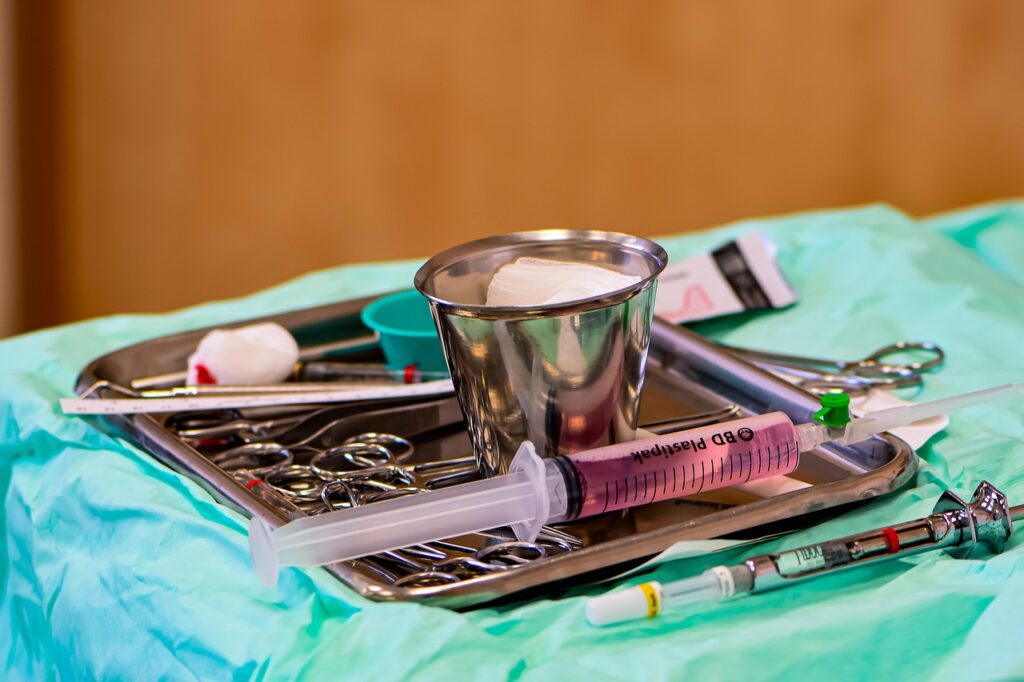
What sterilization of instruments in dentistry means
Sterilization of instruments in dentistry is the process that makes reusable patient-care items safe for use on the next patient. In daily practice, contaminated instruments should pass through a controlled sequence: containment, transport, cleaning, drying, inspection, packaging, heat sterilization, monitoring, storage, and final inspection before use. Public guidance from the CDC, ADA, FDA, and OSHA is consistent on one point: the autoclave or sterilizer is only one part of the system. If instruments are not cleaned first, packaged correctly, monitored, and stored without damage, a completed cycle alone does not prove safe reuse.
For dental teams, buyers, and readers evaluating dental equipment workflows, the practical question is not simply whether a practice owns a sterilizer. It is whether the full reprocessing pathway is set up to protect patients, staff, and instrument integrity. Related instrument topics are available in the Instruments section.
Why classification comes before sterilization
Dental instruments are not all processed in the same way. Infection-control guidance commonly uses risk classification to decide whether an item must be sterilized, high-level disinfected, barrier-protected, or cleaned and disinfected. The classification depends on how the item is used on the patient, not only on the product name.
| Category | Typical dental examples | Expected processing approach |
|---|---|---|
| Critical items | Surgical instruments, extraction forceps, periodontal scalers, surgical burs | Sterilize after each use, or discard if single-use |
| Semicritical items | Mouth mirrors, reusable impression trays, amalgam condensers, air-water syringe tips that contact oral tissues | Heat sterilize when heat-tolerant; high-level disinfection is a minimum option only when heat sterilization is not possible |
| Noncritical items | Radiograph head, blood pressure cuff, facebow, some external contact surfaces | Clean, and disinfect if visibly soiled or between patients when used as clinical contact surfaces |
Critical items carry the highest risk because they penetrate soft tissue or bone. Semicritical items contact mucous membranes or non-intact skin. Many semicritical dental instruments are heat-tolerant, so heat sterilization is usually expected rather than simple surface wiping. Noncritical items generally contact intact skin, but clinical contact surfaces still need barrier protection or disinfection when they are touched during care.
This classification step helps prevent two common errors. One is treating a reusable intraoral item like a countertop surface. The other is assuming that a disposable item can be safely reprocessed. Most single-use devices do not include validated reprocessing instructions, so they should be used for one patient and then discarded according to policy.
The workflow from chairside to sterile storage
A safe sterilization workflow should move in one direction. Instruments go from contaminated areas toward clean and sterile areas without crossing back into dirty zones. The physical layout will vary by clinic size, but the basic logic is the same: receiving and cleaning, preparation and packaging, sterilization, and storage should be physically separated or at least clearly separated by space and workflow.
Containment and transport
After use, contaminated instruments should be handled as little as reasonably possible and transported in a way that reduces exposure to blood, saliva, and sharps injuries. OSHA treats saliva in dental procedures as other potentially infectious material under the Bloodborne Pathogens standard, so instrument movement is also a worker-safety issue. Reusable sharps should be placed in appropriate containers until reprocessing, and staff should not reach blindly into trays, sinks, or containers that may contain sharp items.
Cleaning before sterilization
Cleaning is not optional. Blood, saliva, cement, tissue, and other debris can shield microorganisms and interfere with sterilization. Automated cleaning, such as ultrasonic cleaning or washer-disinfection, is often preferred because it can improve consistency and reduce staff exposure to sharps. If manual scrubbing is necessary, heavy-duty utility gloves, work-practice controls, and a long-handled brush help reduce injury risk.
After cleaning, instruments should be rinsed to remove detergent or chemical residue and then dried thoroughly. Packaging wet instruments can affect the package material and its ability to maintain sterility after the cycle.
Inspection, packaging, and labeling
Cleaned and dried instruments should be checked for visible debris, damage, corrosion, hinged-joint function, and completeness of sets. Packaging materials must allow the sterilizing agent to penetrate and must maintain sterility during storage. Common options include wrapped cassettes, peel pouches, and approved container systems. The choice should match the instrument, sterilizer, and packaging manufacturer instructions.
Labels should support traceability. At a minimum, packaged instruments are commonly labeled with the sterilizer used, cycle or load number, sterilization date, and expiration date if the facility uses date-related storage. This information becomes important if a sterilizer fails, a biological indicator returns positive, or a load has to be recalled.
Sterilization cycle and drying
Most reusable dental instruments are heat-tolerant and should be heat sterilized. Steam under pressure is widely used. Dry heat and unsaturated chemical vapor are also referenced in dental infection-control guidance for appropriate heat-stable materials. The correct time, temperature, pressure, load configuration, drying phase, and maintenance schedule are not universal. They must come from the validated instructions for the instrument, packaging, indicators, and sterilizer.
Shortcuts create risk. Overloading the chamber, using the wrong pouch orientation, removing packs before the drying phase is complete, or placing wet packs directly into storage can compromise results even when the machine appears to have completed a cycle.
Monitoring makes sterilization verifiable
Sterilization cannot be verified by appearance. Instruments may look clean after washing and may be sealed in pouches after a cycle, but visual inspection alone cannot prove that sterilization conditions were achieved. A reliable quality program uses mechanical, chemical, and biological monitoring together.
- Mechanical monitoring checks the cycle data generated by the sterilizer, such as time, temperature, pressure, digital displays, printouts, and alarms.
- Chemical monitoring uses indicators that respond to conditions such as heat, time, steam exposure, or combinations of parameters. An internal chemical indicator should be used inside every package, and an external indicator should be visible when the internal indicator cannot be seen from outside.
- Biological monitoring, often called spore testing, challenges the sterilizer with highly resistant microorganisms. CDC dental guidance states that a spore test should be used at least weekly to monitor sterilizers.
Each method answers a different question. Mechanical records show whether the machine reported the expected parameters. Chemical indicators provide immediate package-level evidence that the sterilant reached the right area. Biological indicators provide the strongest direct challenge to the sterilization process, although results may not be available immediately.
Documentation closes the loop. A useful sterilization record includes the sterilizer and cycle used, load identification, load contents or traceability method, exposure parameters, operator initials, chemical indicator results, biological monitoring results when available, and any corrective action. Record retention should follow state, local, and facility requirements.
Special cases that often lead to mistakes
Some dental items create confusion because they are small, expensive, heat-sensitive, or partly attached to larger equipment. These cases need written instructions and consistent staff training, not informal workarounds.
Dental handpieces and attachments
Dental handpieces, including high-speed, low-speed, electric, endodontic, and surgical handpieces, can have internal components contaminated with patient material during use. CDC guidance states that handpieces and other intraoral instruments removable from dental unit air and waterlines should be cleaned and heat sterilized between patients. Surface disinfection or immersion in liquid germicides is not considered an acceptable substitute for handpieces that require heat sterilization. See also: Implants.
If a handpiece cannot tolerate heat sterilization and does not have FDA clearance with validated reprocessing instructions, it should not be used for multi-patient care. Lubrication, cleaning adapters, couplers, and drying requirements should follow the validated manufacturer instructions, not local habit.
Heat-sensitive semicritical items
When a semicritical item cannot withstand heat, guidance generally favors replacing it with a heat-tolerant or disposable alternative when possible. If no alternative exists, high-level disinfection or liquid chemical sterilization may be used only with products cleared for that purpose and with careful attention to dilution, contact time, temperature, rinsing, ventilation, disposal, and staff protection. These chemicals are powerful and can create their own safety risks if used casually.
Unwrapped or flash sterilization
Unwrapped sterilization, sometimes called flash sterilization, should not be used routinely for convenience, to compensate for too few instrument sets, or to save time. Once instruments are unwrapped, placed on nonsterile surfaces, or handled with nonsterile gloves, sterility cannot be guaranteed. Temporary storage of unwrapped semicritical instruments is discouraged because it exposes them to dust and other contamination before patient use.
Compromised packaging
Sterile storage is event-sensitive. A package that is wet, torn, punctured, dropped in a way that damages integrity, stored under a sink, crushed in a drawer, or exposed to contamination should not be opened for patient care. It should be reprocessed: cleaned as needed, repackaged, and sterilized again.
Storage, training, and accountability
Sterile packs should be stored in a clean, dry, covered, or closed area that protects them from dust, moisture, insects, excessive handling, and temperature or humidity extremes. Storage can be date-related or event-related. Date-related systems use expiration dates and first-in, first-out rotation. Event-related systems recognize that a properly packaged item may remain sterile unless an event compromises the package. The selected system should be written into policy and followed consistently.
Training is as important as equipment. Staff assigned to instrument reprocessing need role-specific instruction before performing the task independently and recurring review afterward. In the United States, OSHA also requires bloodborne pathogens training at initial assignment for employees with occupational exposure and at least annually thereafter. Training should cover PPE, sharps safety, instrument flow, cleaning equipment, packaging, indicators, load release, failed-cycle response, and documentation.
Accountability should not depend on memory. A practice should have written procedures near the reprocessing area, current manufacturer instructions, maintenance records, biological monitoring records, and a process for responding to failed indicators or positive spore tests. If instructions from an instrument manufacturer and sterilizer manufacturer conflict, the issue should be resolved with the manufacturers rather than guessed at by staff.
A practical checklist for dental instrument sterilization
The following checklist summarizes the main control points. It is not a replacement for manufacturer instructions, state rules, or facility policy, but it can help readers assess whether a workflow is complete.
- Classify the item as critical, semicritical, noncritical, or single-use.
- Use disposable items for one patient only unless validated reprocessing instructions exist.
- Transport contaminated instruments in a way that reduces leaks, splashes, and sharps exposure.
- Wear appropriate PPE when handling contaminated instruments.
- Clean instruments before sterilization, preferably with automated equipment when available.
- Rinse and dry instruments before packaging.
- Inspect instruments for debris, damage, function, and set completeness.
- Package instruments in materials compatible with the item and sterilizer.
- Place chemical indicators correctly, including an internal indicator in every package.
- Label packs for traceability, including sterilizer, load or cycle number, date, and expiration date when applicable.
- Run the sterilizer according to validated instructions and do not overload the chamber.
- Allow proper drying before handling or storage.
- Review mechanical cycle data and chemical indicators before releasing instruments.
- Use biological monitoring at least weekly and document results.
- Store sterile packages in covered or closed areas and reprocess any pack that is wet, torn, punctured, or otherwise compromised.
Frequently asked questions
Is sterilization the same as disinfection in dentistry?
No. Sterilization is intended to destroy all microbial life, including highly resistant bacterial spores. Disinfection reduces or inactivates many pathogenic microorganisms but does not necessarily destroy all spores. That difference is why critical instruments and most heat-tolerant semicritical dental instruments require sterilization rather than surface disinfection.
Do dental instruments need to be cleaned before autoclaving?
Yes. Cleaning must come before sterilization because organic debris can protect microorganisms and interfere with the sterilization process. Ultrasonic cleaners and washer-disinfectors are commonly used to improve consistency and reduce sharps handling, although manual cleaning may still be needed for some items when performed safely.
How often should dental sterilizers be spore tested?
CDC dental guidance states that a spore test should be used at least weekly to monitor sterilizers. Practices may test more often depending on state rules, accreditation requirements, facility policy, sterilizer type, surgical load practices, or after maintenance and repair.
Can dental handpieces be wiped instead of sterilized?
For handpieces and removable intraoral attachments that require heat sterilization, wiping is not an acceptable substitute. These devices can become internally contaminated during use, so they should be cleaned, lubricated when required, and heat sterilized according to validated manufacturer instructions between patients.
What should happen if a sterile instrument pouch is wet or torn?
The pack should not be used for patient care. A wet, torn, punctured, or otherwise compromised package can no longer be relied on to maintain sterility. The contents should be reprocessed according to policy before use.
Key takeaway
The safest approach to sterilization of instruments in dentistry is a documented, monitored workflow rather than a single machine cycle. Classification determines the processing requirement. Cleaning prepares instruments for sterilization. Packaging and labeling preserve traceability. Mechanical, chemical, and biological monitoring make the process verifiable. Storage and final inspection protect instruments until they reach the chair. When every step is performed in order, the result is stronger infection control, clearer accountability, and safer reuse of dental instruments.