
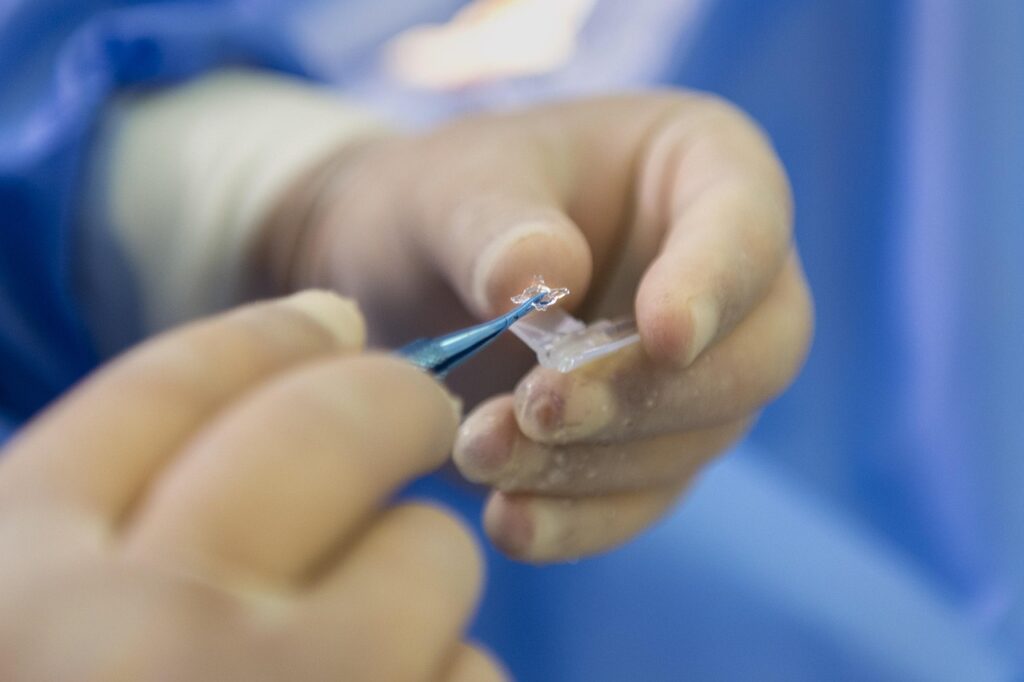
Why sanitizing surgical instruments is not the end point
Sanitizing surgical instruments is a common search phrase, but in healthcare reprocessing it is not the most precise end point. Instruments that enter sterile tissue or the vascular system are expected to be thoroughly cleaned and then sterilized, not simply surface-sanitized. Public guidance from the CDC, FDA, WHO, AAMI and AORN consistently treats reusable surgical instruments as part of a controlled workflow: point-of-use care, contained transport, decontamination, cleaning, inspection, packaging, sterilization, monitoring and storage. The practical point is direct: sterilization cannot compensate for poor cleaning, and every device should be processed according to its manufacturer’s validated instructions for use.
For readers following surgical instrument trends and reprocessing practices, the Instruments section can be a useful place to track related topics in instrument design, handling and maintenance.

The word sanitizing is often used in public-facing language because it sounds simple. In sterile processing, the terms matter. Cleaning removes visible and invisible soil. Disinfection reduces or destroys many microorganisms, depending on the level of disinfection used. Sterilization is intended to destroy all forms of microbial life, including bacterial spores, when the process is correctly selected, loaded, monitored and completed.
The Spaulding classification, used widely in infection prevention guidance, places surgical instruments in the critical category because they contact sterile tissue or the vascular system. Critical items generally require sterilization before use. An instrument that looks clean after wiping, soaking or ultrasonic cleaning is still not ready for a sterile field until the required sterilization process has been completed and released according to facility policy.
The reprocessing workflow from operating room to sterile storage
Reliable instrument reprocessing is a sequence, not a single machine cycle. If one step is weak, the steps that follow become less dependable. The workflow below reflects the structure used in major guidance documents and in sterile processing practice.
Point-of-use treatment
Point-of-use treatment begins in or near the procedure area. Its purpose is not to sterilize instruments at the sterile field. It is to keep blood, tissue and other material from drying on surfaces, hinges, serrations and lumens before the instruments reach decontamination.
Current professional guidance emphasizes removing gross soil during the case when safe to do so, keeping instruments moist until cleaning, and using facility-approved products and procedures. This matters because dried organic material can be harder to remove and may interfere with later disinfection or sterilization. Lumened and complex instruments need particular attention because soil can remain in channels that are not visible from the outside.
Contained transport
Used instruments should be transported in a way that protects staff, patients and the environment. A closed or covered container helps reduce exposure risk and keeps contaminated instruments separated from clean traffic. Transport should also help preserve moisture when required by the device instructions and facility policy.
Delays are a common pressure point. Loaner trays, add-on cases, off-site processing arrangements and high turnover schedules can all compress the available time. Even when speed is important, the reprocessing sequence should not be shortened unless the manufacturer’s instructions and facility policy allow a specific alternative.
Decontamination and cleaning
In the decontamination area, staff typically sort, disassemble and clean instruments using manual methods, automated washers, ultrasonic cleaners or a combination of methods. The correct approach depends on the instrument design and the manufacturer’s instructions for use. A simple clamp may be processed differently from a powered device, flexible accessory, robotic instrument or lumened orthopedic tool.
Cleaning chemistry, water quality, water temperature, brush size, contact time and rinse method all influence results. Enzymatic detergents, neutral pH detergents and instrument lubricants are not interchangeable products; each has a specific role and should be used as labeled. The wrong product or concentration can leave residues, damage passivation layers, corrode surfaces or reduce cleaning performance.
Inspection, function checks and assembly
After cleaning, instruments should be inspected for cleanliness, damage and function before packaging. This is where many hidden problems are found: retained debris in box locks, cracked insulation, misaligned jaws, pitting, staining, stiff hinges, dull cutting edges, damaged lumens or missing components.
Visual inspection may be supported by magnification, lighted inspection tools, borescopes for lumens and cleaning verification tests where facility policy requires them. A sterile instrument that cannot function safely is still a patient safety risk. For that reason, inspection should evaluate both microbial risk and mechanical readiness.
Packaging, sterilization and storage
Packaging must allow sterilant contact, drying and aseptic presentation. Wrapped sets, rigid containers and peel pouches should be compatible with the sterilization method, load weight, tray configuration and instrument type. Overloaded trays, nested instruments and incorrect pouching can block sterilant contact or drying.
After sterilization, packages should be handled in a way that protects package integrity. Tears, wet packs, broken seals, missing labels or questionable chemical indicators should trigger review before release. Sterile storage areas should support event-related sterility by controlling handling, traffic, dust, moisture and package damage.
Cleaning quality determines whether sterilization can work
The key point behind sanitizing surgical instruments is that sterilization depends on cleaning. The CDC and FDA both explain that organic and inorganic material left on an instrument can interfere with later high-level disinfection or sterilization. In practical terms, a sterilizer is not a substitute for an effective cleaning process.
This is especially important for instruments with complex geometry. Hinges, ratchets, serrations, cannulas, suction channels, cutting flutes and textured surfaces can retain soil even when exterior surfaces appear acceptable. Automated equipment improves consistency, but it does not remove the need for correct pre-cleaning, disassembly, loading and inspection.
Manufacturer instructions for use are central because they define the validated process for a specific device. A facility may have strong general policies, but the instrument IFU remains the primary reference for disassembly, brushing, flushing, detergent type, ultrasonic compatibility, washer cycle, drying, lubrication, sterilization parameters and reuse limits where applicable. See also: Implants.
Water is another underestimated variable. Minerals, chlorides, microbial contamination and poor rinsing can contribute to staining, corrosion, residues or spotting. Not every stain means an instrument is unsafe, but staining should not be ignored because it may signal cleaning chemistry, steam quality, water quality or handling problems. Facilities generally need a process for distinguishing cosmetic discoloration from retained soil, corrosion or surface damage.
Sterilization methods and monitoring should match the device
Steam sterilization remains a common method for many reusable surgical instruments because it is effective, well established and suitable for many heat- and moisture-stable devices. AAMI ST79 is widely referenced in the United States as a comprehensive guide for steam sterilization and sterility assurance in healthcare facilities. However, not every device can tolerate steam, and sterilization method selection should always follow the device IFU.
Heat- or moisture-sensitive devices may require low-temperature methods such as vaporized hydrogen peroxide or ethylene oxide, depending on device compatibility, local regulation, available equipment and manufacturer validation. Liquid chemical sterilants have specialized uses and strict requirements, but they are not a casual replacement for terminal sterilization of packaged surgical sets.
Monitoring is another essential safeguard. Mechanical monitoring reviews cycle parameters such as time, temperature and pressure. Chemical indicators help show that a package or load has been exposed to sterilization conditions. Biological indicators use resistant spores to challenge the process and provide a direct measure of sterilization performance. Public CDC recommendations include using biological indicators for every load containing implantable items and quarantining implants when possible until results are known.
Documentation supports traceability. Sterilizer identification, cycle type, load number, contents, operator identification, exposure parameters and monitoring results help facilities determine what was processed and whether a recall investigation is needed if a failure occurs. Good documentation is not paperwork for its own sake; it is part of risk control.
Where reprocessing failures commonly occur
Most failures are not dramatic equipment breakdowns. More often, small process gaps accumulate. A set returns from the operating room dry. A multi-part device is not fully disassembled. A lumen is brushed with the wrong size brush. A tray is too dense for the selected cycle. A package is moved before it cools. A chemical indicator is not checked. A loaner set arrives too late for a normal workflow.
- Dried soil: Blood and tissue left to dry can make cleaning more difficult and may shield microorganisms from later processing steps.
- Skipped disassembly: Hinged, layered or modular instruments may trap soil if they are cleaned as a single closed unit.
- Wrong tools: Brushes, flushing adapters and cleaning accessories must match the instrument design and IFU.
- Overloaded trays: Excessive density can limit sterilant contact, drying and inspection quality.
- Unclear responsibility: Point-of-use care requires coordination between the procedure area and sterile processing team.
- Immediate-use steam sterilization pressure: IUSS is intended for defined urgent situations, not routine inventory shortages or convenience, and items processed by IUSS are not meant for later storage.
- Poor recall readiness: Missing load records or weak traceability can slow response when a monitoring failure is discovered.
These issues show why instrument reprocessing should be managed as a system. Staffing, training, case scheduling, instrument inventory, equipment maintenance, water quality and surgeon preference cards all influence the ability to sanitize, clean and sterilize instruments correctly.
A practical quality checklist for surgical instrument reprocessing
The following checklist is not a replacement for official standards or local policy. It is a practical way for managers, educators and instrument teams to check whether the reprocessing system is controlled from start to finish.
| Control point | Key question | Evidence to review |
|---|---|---|
| Point of use | Are gross soil removal and moisture preservation performed consistently? | OR policy, staff competency records, observation audits |
| Transport | Are contaminated instruments contained and delivered without avoidable delay? | Transport logs, case turnover review, container condition |
| Cleaning | Are instruments disassembled, brushed, flushed and washed according to IFU? | IFU access, washer records, ultrasonic maintenance, cleaning verification results |
| Inspection | Are staff able to detect soil, damage, corrosion and function problems? | Inspection tools, repair records, rejected set trends |
| Packaging | Does the package support sterilant contact, drying and aseptic presentation? | Tray weights, container compatibility, wrap and pouch audits |
| Sterilization | Is the selected cycle validated for the device and load configuration? | Cycle printouts, IFU, sterilizer qualification records |
| Release and storage | Are monitoring results checked and package integrity protected? | Load release records, storage audits, recall procedure |
One useful management step is to compare rejected set data with upstream causes. If inspection failures cluster around one instrument type, one service line or one time of day, the problem may not be the sterilizer. It may be point-of-use care, tray design, staffing, training, delayed transport or insufficient instrument inventory.
Frequently asked questions
Is sanitizing the same as sterilizing surgical instruments?
No. In healthcare reprocessing, sanitizing is a broad term and is not the usual required end point for critical surgical instruments. Cleaning removes soil, disinfection reduces microorganisms to a defined level, and sterilization is intended to eliminate all forms of microbial life when properly performed.
Can a sterilizer make a poorly cleaned instrument safe?
Facilities should not rely on sterilization to overcome poor cleaning. Soil, salts and residues can interfere with sterilization. Instruments should be cleaned, inspected and packaged correctly before sterilization.
Why is point-of-use care so important?
Point-of-use care helps prevent blood and tissue from drying on instruments before decontamination. This improves the likelihood that later cleaning steps will remove soil from hinges, serrations, lumens and other difficult areas.
When is immediate-use steam sterilization appropriate?
Immediate-use steam sterilization is reserved for defined urgent situations when an item is needed immediately for a procedure and all required cleaning, decontamination, rinsing, sterilization and aseptic transfer steps can still be completed. It should not be used as a routine workaround for insufficient inventory or poor scheduling.
What is the safest general principle for reusable surgical instruments?
Follow the manufacturer’s validated instructions for use, supported by current facility policy and recognized guidance from infection prevention and sterile processing organizations. If the IFU and local practice conflict, the discrepancy should be resolved before the instrument is used.