PEEK dental implants in context
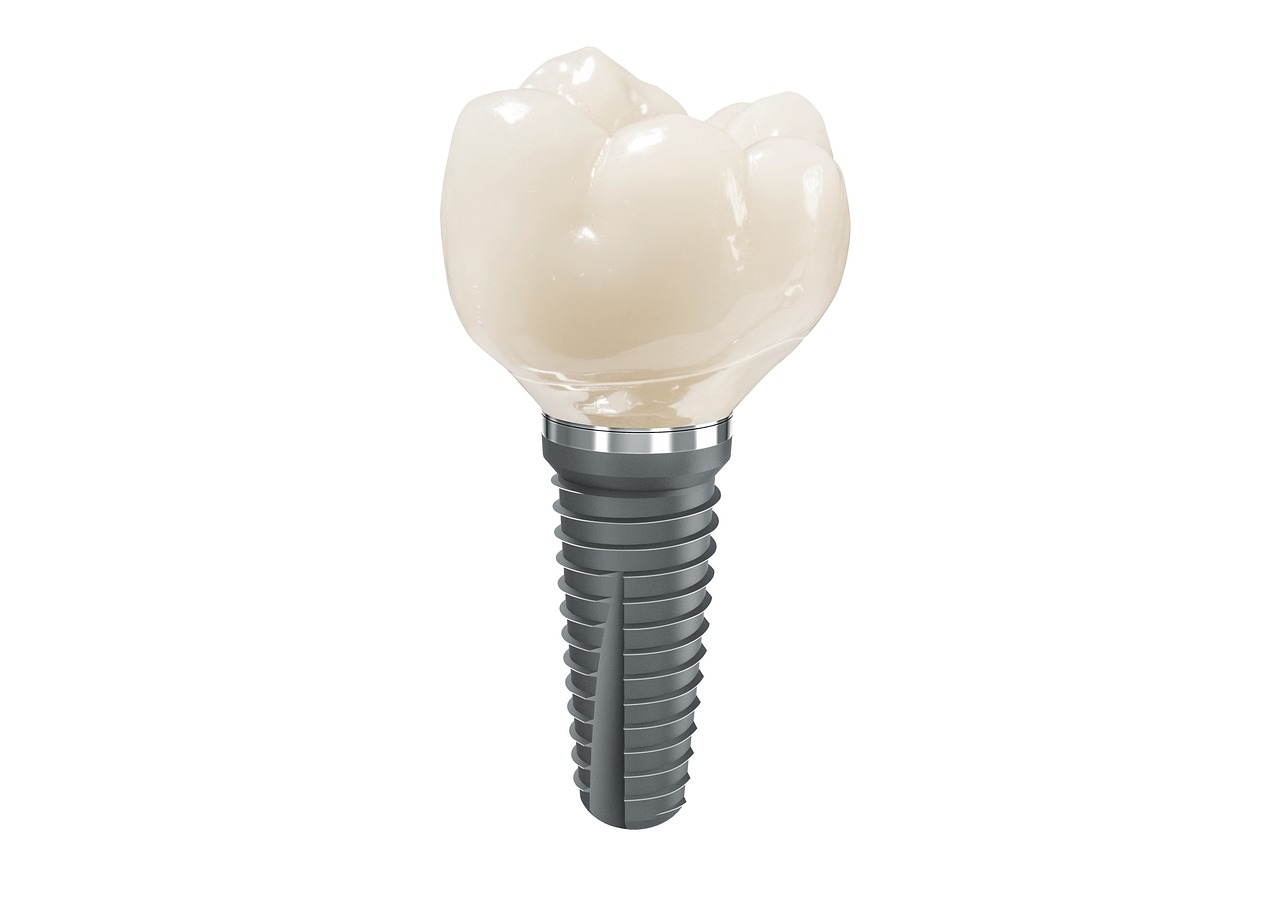
PEEK dental implants are attracting interest because polyetheretherketone is lightweight, metal-free, chemically stable, and mechanically closer to bone than many metals. The clinical position, however, is still cautious. PEEK is not yet a routine replacement for titanium dental implant bodies. Public FDA patient information describes a dental implant system as an implant body, an abutment, and sometimes a fixation screw, and notes that most dental implant systems are made from titanium or zirconium oxide. Current research supports PEEK as a promising material platform, but its bioinert surface, bonding challenges, and limited long-term human evidence remain major barriers. For broader implant material context, visit our Implants section. (fda.gov)
The distinction is important. In everyday searches, PEEK dental implants may refer to three different uses: a PEEK implant body placed into bone, a PEEK abutment connected to a titanium or zirconia implant, or a PEEK framework used in a provisional or final implant-supported prosthesis. The evidence base is different for each one.
What PEEK is and why dentistry is interested in it
PEEK, short for polyetheretherketone, is a high-performance thermoplastic in the polyaryletherketone family. Reviews of dental applications describe it as strong, tough, fatigue resistant, chemically stable, radiolucent, and biocompatible. These properties explain why it has been investigated in orthopedics, maxillofacial surgery, prosthodontics, orthodontics, and implant-related dentistry. Its Young’s modulus is often reported at around 3–4 GPa, while carbon-fiber-reinforced PEEK can be closer to cortical bone; titanium is much stiffer. (pmc.ncbi.nlm.nih.gov)
| PEEK feature | Potential dental implant relevance | Evidence caveat |
|---|---|---|
| Lower elastic modulus than titanium | May reduce stress shielding and transfer load more naturally to surrounding bone | Stress distribution is complex and depends on implant design, surface, bone quality, and prosthetic loading |
| Metal-free composition | May interest patients with metal sensitivity concerns or aesthetic preferences | Metal-free does not automatically mean clinically superior or risk-free |
| Chemical stability and corrosion resistance | Useful in the oral environment, where moisture, pH change, and bacteria matter | Surface inertness can also reduce bonding and biological activity |
| Radiolucency | May reduce imaging artifacts compared with some metals | Radiolucency can make implant margins harder to visualize unless markers or composites are used |
| Machinability and CAD/CAM potential | Useful for custom abutments, frameworks, and provisional restorations | Manufacturing accuracy does not solve osseointegration by itself |
The strongest argument for PEEK is biomechanical rather than cosmetic. A 2023 systematic review in Evidence-Based Dentistry reported that PEEK and its composites showed less stress shielding than titanium and zirconia in the included studies because of their lower modulus of elasticity. The same review concluded that further work is needed to achieve more homogeneous stress reduction along the full implant length. (nature.com)
The key challenge is osseointegration
Dental implant success depends heavily on osseointegration: the stable structural and functional connection between living bone and the implant surface. Titanium and zirconia implant systems have long benefited from surface engineering intended to support bone response. PEEK faces a different issue. Its chemical stability and low surface energy are useful for durability, but untreated PEEK is generally described as hydrophobic and bioinert, which can limit direct bone contact and bonding to dental resins. (pmc.ncbi.nlm.nih.gov)
Researchers have approached this through surface modification and composite design. Reported strategies include increasing roughness, improving hydrophilicity, plasma treatment, sulfonation, laser texturing, coating with bioactive materials, and blending PEEK with fillers such as hydroxyapatite, titanium dioxide, bioactive glass, or carbon fibers. A review of nanomodified PEEK dental implants concluded that several approaches may improve bioactivity, but the included evidence was mainly preclinical. A later systematic review grouped strategies into physical, chemical, surface-coating, and blending modifications and emphasized that PEEK’s inertness still limits clinical application. (pmc.ncbi.nlm.nih.gov)
In practice, the question is not simply whether a PEEK screw can be manufactured. The harder question is whether a specific PEEK implant design, with a specific surface treatment, can demonstrate reliable bone integration, soft-tissue health, mechanical stability, and low complication rates over many years in human patients. That is a higher evidence threshold than promising laboratory performance.
How PEEK compares with titanium and zirconia
Titanium remains the reference material for many implant systems because of its long clinical history, corrosion resistance, biocompatibility, and ability to form a stable oxide layer. The American Dental Association notes that titanium and titanium alloys are used for crowns, implants, and partial dental frameworks. Zirconia is a ceramic option with a tooth-colored appearance and high flexural strength, and it is often discussed for patients who prefer a ceramic or metal-free implant approach. (ada.org)
| Material | Typical strength | Main limitation | Best-supported role today |
|---|---|---|---|
| Titanium | Long clinical history, strong osseointegration record, broad system availability | Grey color can matter in thin tissue; rare sensitivity concerns are discussed by some patients | Routine implant body and abutment applications |
| Zirconia | Tooth-colored ceramic, high strength, biocompatible | More brittle than metals; system design and long-term evidence vary | Selected ceramic implant cases and aesthetic abutments |
| PEEK | Low modulus, metal-free, corrosion resistant, radiolucent, machinable | Bioinert surface, weaker osseointegration without modification, limited long-term human data for implant bodies | Provisional frameworks, selected abutments, experimental or emerging implant-body designs |
This comparison does not mean PEEK has no role. It means the role needs to be defined precisely. A PEEK temporary abutment on a titanium implant is not the same clinical claim as a full PEEK implant body intended to integrate with jawbone for decades.
Where the clinical evidence is stronger
The strongest current dental implant evidence for PEEK is generally in implant prosthodontics rather than in routine implant fixtures. A scoping review on PEEK in implant prosthodontics found that the available original research was limited. In that review, PEEK was used in implant-supported fixed dental prosthesis frameworks, prosthetic implant abutments, implant abutment screws, and retention clips. Only 38% of the included studies were clinical, 47% were in vitro, and the authors reported that long-term survival or success rates could not be estimated for any component. (pubmed.ncbi.nlm.nih.gov)
A small clinical report published in 2021 evaluated custom provisional PEEK fixed dental prostheses during implant treatment. It included 23 provisional PEEK prostheses supported by 166 implants in 20 patients. The prostheses functioned through the treatment period, and no PEEK framework fracture was observed. Reported complications included veneer debonding, the need for supplementary screw retention in some partially edentulous cases, and separate implant failures that extended provisional use. This supports PEEK as a useful provisional framework material, not as proof that PEEK implant bodies are ready to replace conventional systems. (pubmed.ncbi.nlm.nih.gov)
Research on PEEK abutments is more clinically relevant than research on PEEK implant bodies because abutments interact with peri-implant soft tissue and the prosthesis rather than serving as the primary bone-integrated root substitute. Some newer reviews compare PEEK, titanium, and zirconia abutments, but the number of direct clinical comparisons remains much smaller than the evidence base behind conventional titanium implant systems. (pmc.ncbi.nlm.nih.gov) See also: Fixation.
Questions to ask before considering PEEK
If a patient is offered a PEEK-related implant solution, the first step is to clarify the exact component. A PEEK healing abutment, a PEEK temporary abutment, a PEEK full-arch provisional framework, and a PEEK implant body carry different risk profiles and different evidence levels.
- Which component is PEEK? Ask whether PEEK is used in the implant body, abutment, temporary restoration, framework, screw, or veneered prosthesis.
- What is the regulatory status and indication? The brand, model, component, and intended duration of use should match the product’s cleared or approved indication in the relevant market.
- What surface treatment is used? For a PEEK implant body, the answer should be specific, not simply “biocompatible polymer.”
- What human follow-up data exists? Laboratory, animal, and finite element studies are useful, but they do not replace multi-year clinical outcomes.
- How will the restoration be loaded? Bruxism, cantilevers, full-arch design, occlusion, and bone quality can matter as much as material choice.
- What patient factors affect healing? Public FDA guidance notes that smoking can affect healing and long-term implant success, and that systemic infection, uncontrolled diabetes, local infection, delayed healing, poor hygiene, and untreated periodontal disease are relevant implant risks. (fda.gov)
Material choice should sit within a broader treatment plan. Surgical positioning, bone volume, soft-tissue thickness, prosthetic design, hygiene access, maintenance, and risk control often influence outcomes more than the headline material alone.
Bottom line
PEEK is one of the more interesting non-metal materials in implant dentistry, especially because of its lower stiffness, corrosion resistance, radiolucency, and CAD/CAM potential. It may be useful in temporary abutments, provisional implant-supported frameworks, and selected prosthodontic components. For true PEEK dental implants placed as bone-integrated implant bodies, however, the evidence is still developing.
The cautious conclusion is that PEEK should be viewed as a promising material platform rather than a proven universal replacement for titanium or zirconia implant systems. Its future depends on surface engineering, composite design, long-term clinical trials, and clear product-specific evidence. Patients should not choose PEEK simply because it is metal-free, and clinicians should not present it as established unless the specific component and indication are supported by clinical data.
Frequently asked questions
Are PEEK dental implants already used in dentistry?
Yes. PEEK is used in dentistry, but most commonly in prosthetic or temporary implant-related components such as provisional frameworks and some abutments. Full PEEK implant bodies are much less established than titanium or zirconia implant bodies.
Is PEEK better than titanium for dental implants?
There is not enough evidence to say that PEEK is better than titanium for routine implant bodies. PEEK has attractive mechanical and metal-free characteristics, but titanium has a much longer clinical record and stronger evidence for osseointegration in widely used implant systems.
Does PEEK osseointegrate with bone?
Untreated PEEK is generally considered bioinert, which means it does not naturally encourage bone bonding as strongly as desired for an implant surface. Modified PEEK surfaces and composites are being studied to improve osseointegration, but long-term human evidence remains limited.
Why might a dentist use a PEEK abutment or framework?
A dentist may consider PEEK for provisional restorations, certain abutment situations, or implant-supported frameworks because it is lightweight, machinable, resilient, and metal-free. The indication should be specific, and the patient should understand whether the use is temporary or definitive.
What should patients ask before accepting a PEEK implant option?
Patients should ask which part is made of PEEK, whether it is temporary or permanent, what clinical data supports that exact product, how the surface is treated, and what alternatives are available. They should also ask how personal risk factors such as smoking, diabetes control, periodontal disease, and bite forces affect the plan.