
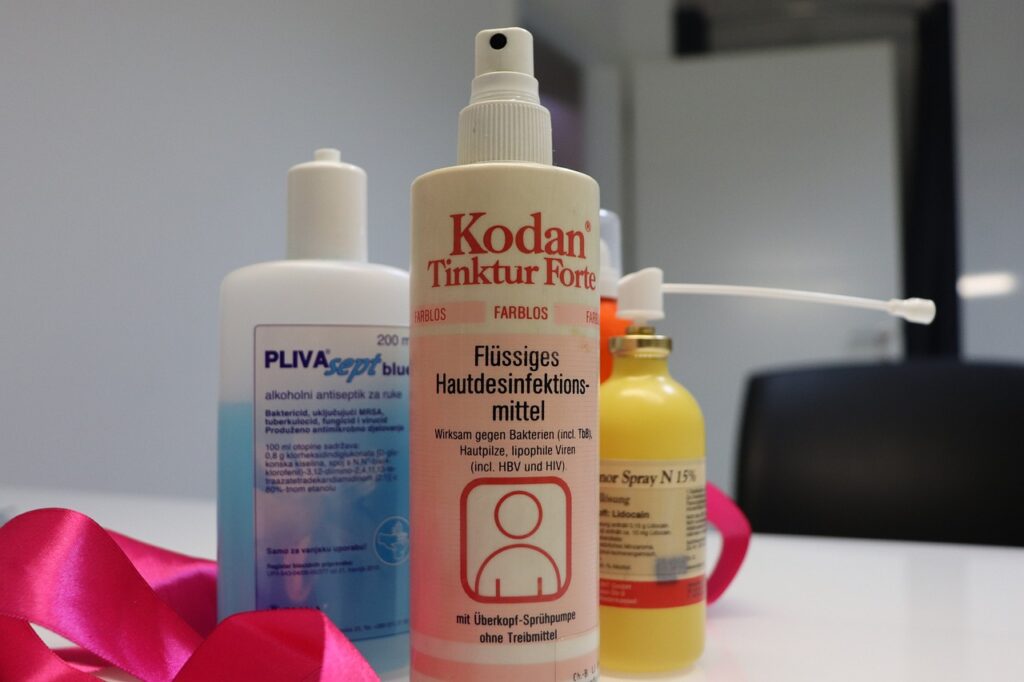
Why the wording matters
Disinfection of surgical instruments is often used as a broad phrase. In clinical practice, however, it needs a precise meaning. Most reusable surgical instruments are critical devices because they contact sterile tissue, the vascular system or sterile body fluids. For these instruments, disinfection alone is not the expected endpoint; sterilization is required before reuse.
Disinfection still has an important role in the wider reprocessing program, particularly for semicritical devices, noncritical equipment and environmental controls. It should not be used as a substitute for validated sterilization when an instrument is classified as critical.
This Instruments guide explains the practical distinction between cleaning, disinfection and sterilization, using publicly available guidance from organizations such as the CDC, FDA, AAMI, AORN and The Joint Commission as reference points. It is intended for industry education and content review, not as a substitute for facility policy, manufacturer instructions for use or local regulatory requirements.
Cleaning, disinfection and sterilization are not interchangeable
The safest way to understand instrument reprocessing is to separate the three terms. Cleaning removes visible soil and reduces bioburden through water, detergents, enzymatic cleaners, friction and mechanical action. Disinfection reduces or eliminates many microorganisms, depending on whether the process is low-level, intermediate-level or high-level. Sterilization is the validated process intended to destroy all forms of microbial life, including bacterial spores, with sterility expressed as a probability rather than a visual condition.
This distinction matters because surgical instruments can look clean while still carrying residual protein, tissue, salts, biofilm or microorganisms in hinges, box locks, serrations, insulation defects or lumens. Organic and inorganic residue can interfere with both chemical disinfection and sterilization. That is why major guidance documents consistently place cleaning before high-level disinfection or sterilization.
In practical terms, a sterilizer cannot compensate for poor cleaning, incorrect assembly or failure to follow the device manufacturer’s instructions. Likewise, an appropriate disinfectant cannot make a critical surgical instrument ready for use if the validated reprocessing requirement is sterilization.
The Spaulding classification still guides the decision
Many reprocessing decisions are based on the Spaulding classification, which groups patient-care items by the infection risk associated with their intended use. The framework is not new, but it remains central because it links the device’s contact type with the minimum level of microbial control needed before reuse.
| Device category | Typical contact | Examples | Minimum expected process |
|---|---|---|---|
| Critical | Sterile tissue, vascular system or sterile body fluids | Forceps, scalpels, retractors, implants, many surgical instruments | Sterilization before patient use |
| Semicritical | Mucous membranes or nonintact skin | Some endoscopes, respiratory therapy equipment, laryngoscope blades | At least high-level disinfection, or sterilization when required by IFU or risk profile |
| Noncritical | Intact skin only | Blood pressure cuffs, bed rails, some external equipment | Low-level or intermediate-level disinfection according to label and policy |
For surgical instruments, the key point is straightforward: if an instrument enters sterile tissue or the vascular system, it is critical. The expected endpoint is sterilization. High-level disinfection may be relevant for certain semicritical devices, but it should not be treated as a shortcut for standard surgical instrument sterilization.
The reprocessing chain starts before the sterile processing department
Safe reprocessing does not begin when a tray reaches decontamination. It begins at the point of use, where gross soil can dry quickly and become harder to remove. Current professional guidance emphasizes prompt removal of visible soil, keeping instruments moist when delayed cleaning is expected, and transporting contaminated instruments in a way that protects personnel and the environment.
Point-of-use treatment and transport
Point-of-use treatment usually includes wiping or irrigating instruments according to the device IFU and facility procedure. Instruments should not be allowed to dry with blood or tissue on their surfaces. Delays should trigger the facility’s delayed-cleaning process, especially for complex devices, lumened instruments or items with narrow channels.
Transport is also part of risk control. Contaminated instruments should be contained to prevent exposure and cross-contamination. When instruments are moved to offsite or centralized sterile processing locations, containment, traceability and appropriate environmental controls become more important because the time and distance between use and cleaning increase.
Manual and mechanical cleaning
Manual cleaning relies on friction, brushing, flushing and detergents or enzymatic cleaners that are compatible with the device. Mechanical cleaning may include ultrasonic cleaners, washer-disinfectors or other validated equipment. Mechanical systems can improve consistency, but they do not remove the need for correct loading, disassembly, channel flushing, equipment maintenance or verification.
Complex instruments need closer attention. Hinges, removable parts, serrations and lumens should be opened, disassembled or flushed as required by the manufacturer’s instructions. A device with a narrow lumen may require a specific brush size, flush volume, water quality, detergent concentration, contact time or mechanical perfusion. If the IFU cannot be performed with the available equipment, that is a process gap, not a documentation issue.
Inspection and preparation
After cleaning, instruments should be dried and inspected before packaging or placement into a sterilization container. Inspection is not only about visible cleanliness. Staff should also look for damage, corrosion, misalignment, pitting, insulation failure, dullness, stiff movement and retained debris. Instruments that cannot be cleaned, disinfected or sterilized as intended should be repaired, removed from service or managed according to facility policy.
When disinfection is appropriate and when it is not enough
Disinfection is appropriate when the device category and IFU support it. Noncritical patient-care items that touch intact skin are commonly disinfected with an appropriate healthcare disinfectant. Semicritical devices generally require high-level disinfection at a minimum, unless the manufacturer or facility policy requires sterilization. Chemical disinfectants must be used according to their label, including concentration, temperature, contact time, reuse life, ventilation, rinsing and safety precautions.
For reusable surgical instruments used in invasive procedures, the analysis is different. The question is not whether a disinfectant can reduce microbial load. The question is whether the final process meets the requirement for a critical device. In most cases, that requirement is sterilization after effective cleaning.
Steam sterilization is widely used for heat- and moisture-stable surgical instruments because it is reliable, well understood and compatible with many metal instruments. Heat- or moisture-sensitive devices may require low-temperature sterilization technologies such as ethylene oxide, vaporized hydrogen peroxide or other validated methods. The correct method is the one supported by the device IFU, sterilizer IFU, packaging system and facility validation or quality assurance program.
Controls that make reprocessing more reliable
Reprocessing failures rarely come from one dramatic mistake. More often, risk builds through small variations: dried soil, missing IFUs, incomplete disassembly, overloaded trays, incompatible detergents, poor water quality, skipped inspection or undocumented cycle problems. A practical program uses controls at every step. See also: Implants.
- Manufacturer IFUs: Device, detergent, washer, packaging and sterilizer instructions should be available, current and compatible with each other.
- Staff competency: Training should cover point-of-use care, PPE, cleaning tools, lumened instruments, inspection, packaging, sterilizer loading and response to failures.
- Water quality: Water used for cleaning and final rinsing can affect residue, staining, corrosion and process outcomes. Recent AORN updates have placed more emphasis on water quality expectations and trending.
- Cleaning verification: Visual inspection is necessary but may be insufficient for complex instruments. Facilities may use cleaning indicators, protein tests, borescopes or other methods according to policy and risk.
- Packaging and tray configuration: Hinged instruments should generally be opened, removable parts disassembled when required, concave items positioned for drainage and heavy items arranged to avoid damage and wet packs.
- Sterilization monitoring: Mechanical, chemical and biological monitoring should be performed according to the sterilizer type, load contents, facility policy and applicable standards.
- Event response: Failed indicators, wet packs, incorrect cycle selection, missing documentation or suspected retained soil should trigger quarantine and investigation rather than release.
These controls also support communication between operating rooms, sterile processing departments, infection prevention teams, biomedical engineering and purchasing. A device should not be added to service only because it meets a clinical need. The facility must also be able to clean, inspect, package and sterilize it as instructed.
Common misconceptions about disinfection of surgical instruments
A disinfected instrument is not automatically sterile
High-level disinfection is a powerful process, but it is not the same as sterilization. Low-level and intermediate-level disinfection are even further from the sterility requirement for critical instruments. The required endpoint depends on how the instrument will be used, not on which process is more convenient.
Visual cleanliness is not a full quality check
Visible soil is a serious warning sign, but the absence of visible soil does not prove that a device is clean inside a hinge, lumen or roughened surface. Complex devices may need magnification, lighted inspection, channel checks or cleaning verification tools.
Immediate-use steam sterilization is not routine inventory management
Immediate-use steam sterilization may have a limited role in urgent situations when all required conditions are met. It should not be used to compensate for insufficient instrument inventory, poor scheduling or avoidable turnaround pressure.
Chemical contact time cannot be guessed
Disinfectants and sterilants depend on defined conditions. Shortened contact time, wrong dilution, expired solution, incompatible materials or inadequate rinsing can create patient and staff safety risks. Labels and IFUs are part of the process, not optional references.
What healthcare teams should review
For facilities reviewing their own approach, the most useful audit question is not “Do we disinfect surgical instruments?” A better question is: “Does each reusable device receive the level of reprocessing required by its risk category and manufacturer instructions, every time?”
A review can start with high-risk items: orthopedic sets, robotic and laparoscopic instruments, insulated instruments, lumened devices, loaner trays, offsite-processed instruments and any device with repeated cleaning difficulty. Compare the IFU with actual workflow, available equipment, staff time, water quality, tray configuration and documentation. If the written process and the real process differ, the risk is operational rather than theoretical.
Purchasing is another important review point. Before a new reusable device is adopted, sterile processing and infection prevention teams should assess whether the facility can meet the cleaning, disinfection or sterilization instructions. A device that is clinically attractive but difficult to reprocess can introduce hidden cost, workflow pressure and compliance risk.
Frequently asked questions
Is disinfection enough for surgical instruments?
Usually no. Most surgical instruments are critical devices because they contact sterile tissue or the vascular system. They generally require sterilization after effective cleaning. Disinfection alone is appropriate only when the device classification, intended use and manufacturer instructions support it.
Why must instruments be cleaned before sterilization?
Cleaning removes soil and reduces bioburden that can block contact with the sterilant. Blood, tissue, salts and biofilm can interfere with disinfection or sterilization, especially in hinges, serrations and lumens.
Can heat-sensitive surgical instruments be disinfected instead of sterilized?
Not simply because they are heat-sensitive. Heat- and moisture-sensitive critical devices may require validated low-temperature sterilization. The correct process should come from the device IFU and compatible sterilization system instructions.
What is the role of high-level disinfection?
High-level disinfection is mainly associated with semicritical devices that contact mucous membranes or nonintact skin. It is not a general replacement for sterilization of critical surgical instruments.
Who is responsible for correct instrument reprocessing?
Responsibility is shared. Operating room teams, sterile processing staff, infection prevention, purchasing, biomedical teams and leadership all affect whether instruments are treated promptly, cleaned correctly, inspected, packaged, sterilized and released with proper documentation.
Bottom line
Disinfection of surgical instruments is a useful phrase only when it is understood within the full reprocessing pathway. Cleaning comes first, device classification determines the minimum process, and most invasive surgical instruments require sterilization before reuse. Strong programs focus less on a single step and more on a controlled chain: point-of-use care, safe transport, validated cleaning, careful inspection, compatible packaging, correct sterilization, monitoring, documentation and prompt response when something goes wrong.