
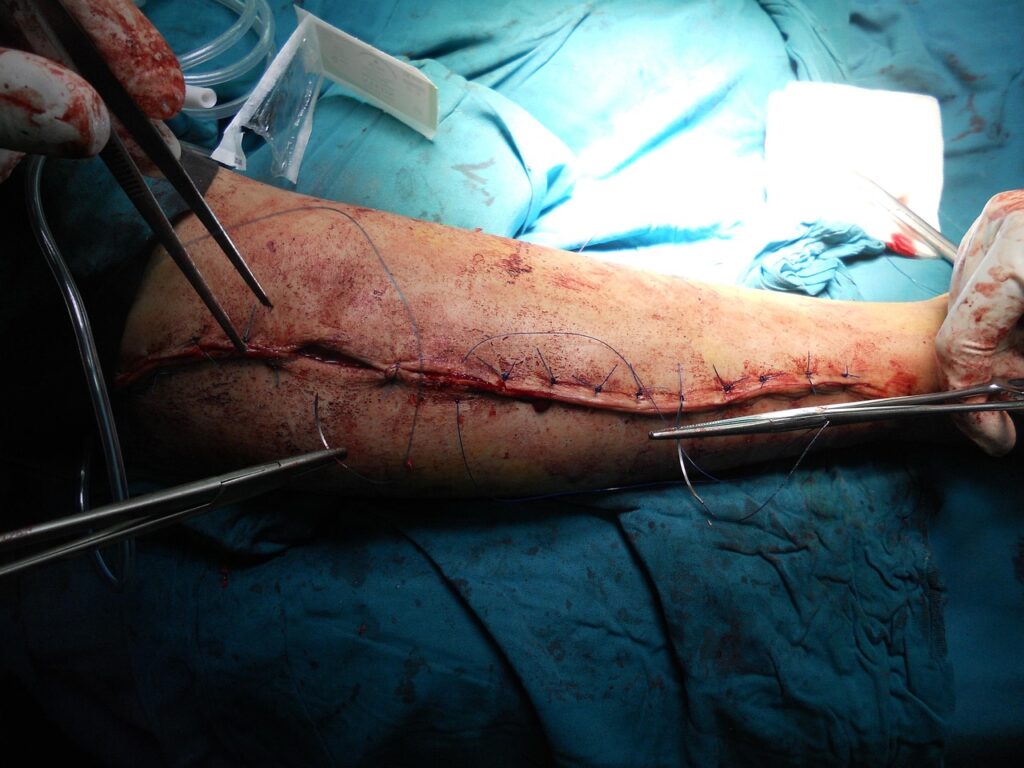
What tantalum orthopedic implants are
Tantalum orthopedic implants are medical devices or device components that use tantalum, most often in a highly porous form, to support bone attachment and long-term biological fixation. In orthopedics, the practical question is usually not whether tantalum can replace titanium or cobalt-chromium across the board. It is more specific: why surgeons and device designers choose porous tantalum for demanding reconstruction cases, including acetabular revision, knee revision cones, spinal cages, augments and bone-defect scaffolds.
Porous tantalum combines a corrosion-resistant metal surface with a trabecular, interconnected structure that can provide high friction against bone and space for tissue ingrowth. This is especially relevant when immediate mechanical stability is difficult, bone stock is poor or a revision implant must bridge an irregular defect. For related materials coverage, visit our Implants section.
Expectations still need to be realistic. Tantalum is a material platform, not a guarantee of clinical success. Outcomes depend on the indication, defect pattern, fixation strategy, infection control, implant design, surgeon experience and patient factors.
Why porous tantalum is different from solid implant metals
Solid implant metals such as titanium alloy, cobalt-chromium alloy and stainless steel are selected for strength, corrosion resistance, processability and long clinical use. Tantalum belongs to the same broad family of metallic biomaterials, but its orthopedic value is usually discussed in relation to porous architecture rather than bulk metal alone.
Porous tantalum structures used in orthopedics are designed to resemble cancellous bone at the interface. Published orthopedic reviews commonly describe pore ranges around 400 to 600 micrometers and high volume porosity, often cited in the 75% to 85% range for established trabecular tantalum materials. The purpose is not simply weight reduction. The open, interconnected network is intended to allow bone and vascularized tissue to grow into the implant surface, creating biological fixation over time.
Several material characteristics explain why tantalum remains a recurring topic in orthopedic implant design:
- High surface friction: A rough, porous surface can help reduce micromotion during the early fixation phase, particularly where host bone contact is limited.
- Osteoconductive architecture: The porous network provides a scaffold for bone ingrowth, although it does not replace the need for adequate host biology.
- Lower apparent stiffness than dense metal: Porosity reduces the effective elastic modulus compared with solid metal, which may help distribute load more naturally at the bone interface.
- Corrosion resistance and biocompatibility: Tantalum has a long history in medical devices and is valued for chemical stability in biological environments.
ASTM F560-22 is the commonly cited standard specification for unalloyed tantalum used in surgical implant applications. It covers chemical, mechanical and metallurgical requirements for forms such as plate, sheet, strip, bar and wire. The standard is material-focused; it does not mean that every tantalum-containing implant design is clinically equivalent.
Where tantalum orthopedic implants are used
The strongest use case for porous tantalum is not routine primary joint replacement in every patient. Its relevance increases when bone loss, instability risk or difficult fixation makes conventional reconstruction more challenging. The American Academy of Orthopaedic Surgeons describes revision total hip replacement as longer and more complex than primary hip replacement, often requiring specialized implants, metal augments, bone graft or custom-made implants when bone or soft tissue has been damaged. That clinical context helps explain why porous tantalum became important in revision systems.
| Application area | How tantalum is used | Main design objective |
|---|---|---|
| Revision hip arthroplasty | Acetabular shells, cups, augments and cup-cage constructs | Improve fixation and fill or bridge acetabular bone defects |
| Revision knee arthroplasty | Metaphyseal cones and sleeves | Reconstruct tibial or femoral metaphyseal bone loss and support component stability |
| Spine surgery | Porous interbody cages or coatings | Promote bony fusion across the implant interface |
| Trauma, tumor and complex reconstruction | Custom or patient-specific porous scaffolds in selected cases | Match irregular defects when standard shapes may be inadequate |
| Surface engineering | Tantalum coating or tantalum-containing porous surfaces on another structural metal | Separate bulk mechanical strength from a bone-friendly interface |
This application map also shows why broad claims can be misleading. A porous tantalum augment for a Paprosky acetabular defect, a spinal cage and a tibial cone share a material concept, but they face different load paths, biological environments and failure modes.
What the clinical evidence suggests
The evidence base for tantalum orthopedic implants is strongest in revision arthroplasty and bone-defect reconstruction, but it is not uniform across all indications. Reviews of porous tantalum in hip and knee reconstructive surgery have generally reported encouraging short- and mid-term outcomes, while also emphasizing the need for long-term data to determine whether theoretical material advantages translate into durable superiority.
A useful example is a 2019 single-centre study in BMC Musculoskeletal Disorders that reviewed 41 patients treated with porous tantalum acetabular revision cups between 2010 and 2012. The study reported a mean follow-up of 72 months. The main indications were aseptic loosening in 83% of cases and two-stage exchange after periprosthetic joint infection in 17%. The authors reported aseptic cup survivorship of 80% at 104 months and overall implant survival of 73%. Harris Hip Score improved from a median of 40 before surgery to 82 after surgery.
Those results need context. The same study found that major bone-loss defects, especially severe Paprosky 3b-type defects, were associated with a higher failure rate than minor defects. Its conclusion was balanced: porous tantalum implants achieved good to excellent short- and mid-term functional results and an acceptable complication rate relative to the extent of the defect, but they had limitations in large defects and pelvic discontinuity.
For buyers, engineers and clinical readers, the evidence lesson is straightforward. Tantalum can be a strong interface material, but it does not erase the mechanical and biological difficulty of severe reconstruction. When failure occurs, the cause may relate less to the intrinsic material and more to defect size, bone contact, infection history, fixation construct or the patient’s overall risk profile.
Tantalum versus titanium in implant design
The most common comparison is tantalum versus titanium, but it is better framed as a design choice than a simple winner-takes-all contest. Titanium and titanium alloys are widely used in orthopedic implants because they offer a strong clinical history, favorable strength-to-weight ratio, corrosion resistance, manufacturability and compatibility with modern additive manufacturing. Porous titanium has also advanced rapidly, especially with 3D printing.
Tantalum’s advantage is usually argued at the interface: high porosity, favorable friction and strong bone ingrowth potential. Titanium’s advantage is broader platform maturity: supply chain scale, cost control, design familiarity, manufacturing flexibility and extensive use across plates, screws, stems, cages and porous components.
For many implants, the solution is not pure tantalum versus pure titanium. Hybrid designs may use titanium alloy as the structural body and tantalum as a porous ingrowth surface or coating. Some FDA 510(k) summaries for acetabular revision shells list tantalum alongside titanium alloy material specifications, showing how device-level designs may combine materials for different functions.
From an editorial and procurement perspective, the right question is not “Which metal is better?” but “Which surface, structure and construct best match this anatomy, defect, load and evidence base?” A well-designed porous titanium implant may be more suitable in one application, while a porous tantalum augment may be preferred in another.
Manufacturing trends and the role of additive manufacturing
Traditional porous tantalum has often been associated with chemical vapor deposition on a carbon scaffold, producing a trabecular-like metal architecture. That process helped establish porous tantalum as a recognizable orthopedic material, but it also created practical constraints in geometry, cost and manufacturing flexibility. See also: Fixation.
Additive manufacturing is changing the discussion. Recent reviews in biomaterials and materials engineering describe selective laser melting, electron beam melting and related processes as ways to produce porous tantalum or tantalum-containing implants with controlled pore geometry, patient-specific shape and functionally graded structures. In theory, this allows a designer to create denser load-bearing regions and more open bone-ingrowth regions within the same implant.
The trend is promising, but it should not be overstated. A 2026 review of additive manufacturing of tantalum and its alloys noted that additively manufactured porous tantalum is moving into orthopedic applications, but evidence is still concentrated in case reports and small series for many patient-specific uses. The review also identified validation needs such as high-cycle fatigue data, long-term ion release and corrosion-fatigue testing, and multicenter clinical follow-up beyond five years.
For industry readers, 3D-printed tantalum is an innovation area rather than a fully settled standard. It may be especially valuable for unusual bone defects and complex reconstruction, but mature clinical adoption will depend on reproducible manufacturing quality, regulatory evidence and long-term outcome tracking.
Key limitations and risk factors to consider
Responsible coverage of tantalum orthopedic implants must include limitations. The first is cost. Tantalum is relatively expensive and difficult to process compared with more common implant metals. That can limit its use to applications where the clinical and mechanical rationale is strong enough to justify the added expense.
The second limitation is indication specificity. Porous tantalum may perform well in certain revision constructs, but evidence from one anatomical site cannot be automatically transferred to another. A hip cup study does not prove the same performance for a spinal cage, and a knee cone series does not answer questions about custom pelvic reconstruction.
The third limitation is infection. A porous surface that supports tissue ingrowth can be helpful for fixation, but infection control is a separate clinical challenge. If bacteria colonize an implant surface or a patient undergoes revision after periprosthetic joint infection, material selection alone is not enough to determine outcome.
The fourth limitation is revision complexity. If a porous implant becomes extensively integrated, removal during future revision can be technically demanding and may sacrifice bone. That does not make the material inappropriate; it means long-term planning matters when choosing any highly porous ingrowth surface.
Finally, newer additive-manufactured tantalum designs need the same disciplined evidence pathway as other implants: fatigue testing, cleaning validation, sterilization validation, imaging compatibility assessment, material traceability and clinical follow-up.
How to read claims about tantalum implants
Marketing language around porous metals can blur the line between material science and clinical proof. A practical checklist helps separate useful information from overreach:
- Look for the exact indication. Is the claim about primary hip, revision hip, revision knee, spine, trauma or custom reconstruction?
- Check the construct, not only the metal. Shells, augments, cones, cages and coatings behave differently.
- Ask for follow-up duration. Early osseointegration is not the same as 10-year survivorship.
- Review the failure endpoint. Aseptic loosening, infection, reoperation for any reason and radiographic migration are different outcomes.
- Separate laboratory data from patient data. Cell attachment, animal ingrowth and mechanical testing support plausibility, but they do not replace clinical evidence.
- Consider the comparator. A study without a titanium or conventional porous-metal control may show good results without proving superiority.
For readers following implant materials, tantalum remains one of the important porous metal options because it links surface mechanics, bone biology and complex reconstruction. Its future growth will likely come from more precise porous design, hybrid material systems and stronger long-term comparative data.
Frequently asked questions
Are tantalum orthopedic implants safe?
Tantalum has a long history as a surgical implant material and is valued for biocompatibility and corrosion resistance. However, safety is evaluated at the device level, not by material name alone. Implant geometry, processing, sterilization, indication and clinical use all matter.
Is tantalum better than titanium for orthopedic implants?
Not universally. Tantalum is often favored for porous bone-ingrowth interfaces in difficult fixation settings, while titanium remains highly versatile, widely used and easier to manufacture at scale. Many designs use the strengths of both materials.
Why is porous tantalum common in revision surgery?
Revision surgery often involves bone loss, scarred tissue, loosened components or previous infection. Porous tantalum can help by offering high friction for initial stability and an interconnected structure for bone ingrowth, especially in augments, cups and cones.
Does porous tantalum prevent implant loosening?
It may reduce the risk of micromotion and support biological fixation in appropriate cases, but it does not eliminate loosening. Severe bone loss, infection, poor implant positioning, inadequate host bone contact and patient risk factors can still lead to failure.
Will 3D-printed tantalum become common in orthopedics?
It is a promising direction, especially for patient-specific and irregular bone-defect reconstruction. Wider adoption will depend on manufacturing consistency, cost, regulatory review and long-term multicenter outcome data.