
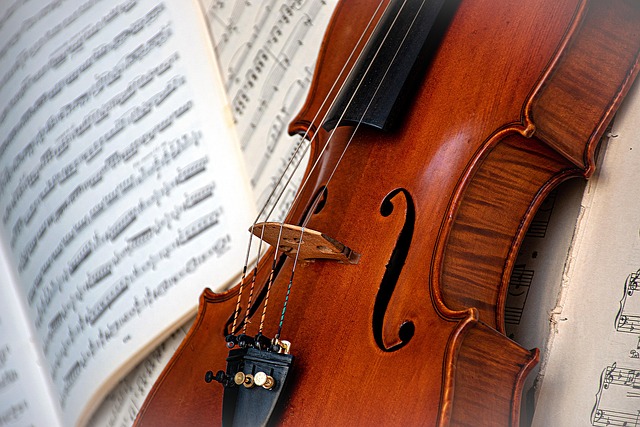
What Makes a Stradivarius Violin So Special? Scientists Traced It to One Forest in Italy
For centuries, the Stradivarius violin has stood as the pinnacle of acoustic craftsmanship. Its sound—clear, warm, and resonant—has fascinated musicians and scientists alike. Research now points to a unique combination of artistry, material science, and geography: Antonio Stradivari’s instruments were crafted from wood sourced from specific Alpine forests in Northern Italy. These trees grew slowly during the Little Ice Age, producing dense, uniform grain that shaped the violin’s legendary tone. Beyond material factors, Stradivari’s meticulous design choices and varnish techniques created instruments that continue to outperform most modern violins even after 300 years.
The Historical Context of Stradivarius Craftsmanship
The story of the Stradivarius violin begins in Cremona, a small Italian city that became the epicenter of violin making during the 17th century. Antonio Stradivari’s workshop refined and elevated existing models into instruments with unmatched projection and tonal complexity.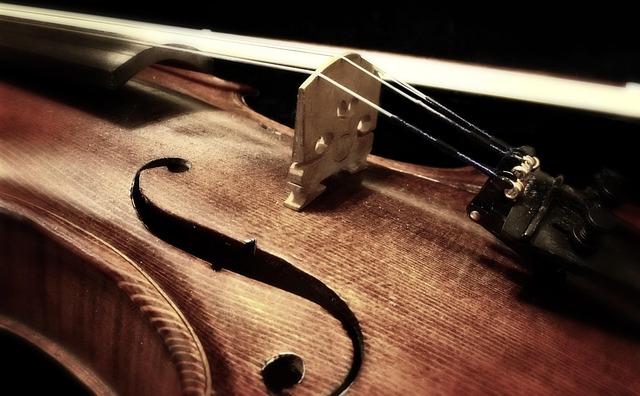
The Legacy of Antonio Stradivari and His Workshop
Stradivari trained under Nicolò Amati before establishing his own workshop around 1680. His early violins showed clear Amati influence—delicate arching and elegant outlines—but his later works introduced bolder proportions and richer tonal depth. Collaboration and competition with other Cremonese families like Guarneri further advanced design principles that defined the “Golden Period” between 1700 and 1720. Instruments from this era display exceptional balance between power and subtlety, attributes still sought after by soloists today.
Materials and Tools Used in 17th–18th Century Cremona
Cremonese luthiers relied on locally sourced spruce for tops and maple for backs, ribs, and necks. These woods came from Alpine regions where cold climates produced fine-grained timber ideal for resonance. Hand tools such as gouges, planes, and scrapers allowed precise shaping of plates without mechanical uniformity. Varnishes were mixtures of natural resins like amber or mastic combined with linseed oil and pigments. Compared with modern CNC-based manufacturing, these handcrafted methods introduced micro-variations that contributed to each instrument’s individuality.
The Acoustic Properties That Define a Stradivarius
The acoustic excellence of a Stradivarius violin lies in its structural geometry and material behavior under vibration. Modern research shows how seemingly minor asymmetries or irregularities enhance tonal richness rather than diminish it.
Structural Design and Resonance Optimization
The thickness distribution across the top and back plates determines how vibrations travel through the body. Slightly thinner centers promote responsiveness while thicker edges stabilize structure. The curvature—or arching—controls air volume within the body, influencing resonance frequencies. Even small deviations between left and right sides alter overtone balance, giving each instrument its own “voice.” Bridge placement relative to string tension further refines how energy transfers into the soundboard.
Wood Density and Its Influence on Tonal Quality
Scientific analyses reveal that spruce used by Stradivari had unusually high density yet low internal damping—traits linked to slow growth during colder centuries known as the Little Ice Age. These conditions produced narrow annual rings with consistent cell structure, allowing efficient energy transmission across frequencies. Microscopic studies show that lignin distribution within cell walls affects stiffness gradients critical for sustaining long vibrations without distortion.
The Role of Varnish and Surface Treatment in Sound Production
Beyond structure, surface chemistry plays a vital role in shaping tone. Varnish acts not merely as protection but as an acoustic interface between air movement and vibrating wood fibers.
Composition and Application Techniques of Stradivari’s Varnish
Chemical analyses identify natural resins mixed with drying oils applied in multiple thin layers over a mineral ground coat. This layering enhances transparency while preserving flexibility essential for vibration transfer. Each layer was carefully polished before curing under sunlight—a process impossible to replicate precisely today. In contrast, many modern violins use synthetic varnishes that prioritize durability over acoustic permeability.
Effects of Aging on Varnish and Tonewood Interaction
Over centuries, oxidation alters resin elasticity while microscopic cracks form due to humidity cycles. These changes subtly modify damping properties at high frequencies, often resulting in warmer perceived tone. Aged varnish interacts with underlying wood fibers through diffusion processes that stabilize moisture exchange—a factor contributing to long-term tonal consistency observed in historical instruments.
Modern Scientific Investigations into Stradivarius Instruments
Recent decades have seen advanced imaging technologies applied to these violins to uncover their physical secrets without damaging them.
Acoustic Imaging and Spectral Analysis Techniques
CT scanning reveals internal density variations invisible externally, while laser vibrometry maps surface motion patterns during excitation tests. Modal analysis compares frequency responses across dozens of instruments showing consistent resonance peaks around key harmonic bands linked to human vocal timbre perception. Such data confirm that structural asymmetry is deliberate rather than accidental craftsmanship variance.
Material Science Approaches to Understanding Stradivarius Sound
Isotopic studies trace spruce origins to specific Alpine valleys near Val di Fiemme—the same forests still supplying top-grade tonewood today. Some samples contain traces of chemical treatments possibly intended for preservation against insects or fungi but incidentally affecting acoustic damping ratios. Experimental replicas made under controlled humidity show measurable though subtle differences compared with originals, reinforcing how environmental context shaped their materials’ properties.
Comparing Stradivarius Violins with Modern Instruments
While technology has improved consistency in violin making, few modern instruments fully replicate the complex interplay found in historical ones.
Differences in Construction Philosophy Between Eras
Stradivari worked by intuition refined through decades of experience; every curve was adjusted by hand guided by tactile feedback rather than templates alone. Today’s luthiers often employ computer modeling or CNC carving for precision replication but lose some natural variability that contributes to characterful tone diversity among antique violins.
Perceptual Studies on Tone Evaluation by Expert Musicians
Double-blind experiments involving professional players frequently show mixed results: some cannot reliably distinguish old from new violins when unaware of provenance; others consistently prefer antique instruments citing greater “depth” or “color.” Psychological factors like expectation bias also play roles—proof that perception intertwines science with emotion more tightly than measurements alone suggest.
Preservation, Restoration, and Ethical Considerations in Performance Use
Maintaining playable condition while respecting historical authenticity demands careful judgment from conservators.
Conservation Strategies for Maintaining Structural Integrity
Restorers use reversible adhesives such as hide glue for repairs so future interventions remain possible without damage. Stabilizing aged wood requires humidity control around 45–50% RH; extremes risk cracking or warping plates already thinned by centuries of tension stress.
Balancing Historical Value with Practical Musicianship Needs
Debate persists whether masterpieces should remain active concert tools or preserved artifacts. Regular performance keeps them acoustically “alive,” yet every handling carries risk to irreplaceable materials. Ethical restoration avoids replacing original components unless absolutely necessary since provenance documentation directly influences cultural heritage valuation.
FAQ
Q1: Why are Stradivarius violins considered superior?
A: Their combination of precise craftsmanship, unique Alpine wood density from colder climates, and centuries-old varnish chemistry create unmatched tonal richness.
Q2: Can modern technology reproduce a true Stradivarius sound?
A: Despite advanced modeling tools, replicas rarely capture identical vibrational complexity because natural variability cannot be programmed perfectly.
Q3: How does aging affect their sound quality?
A: Aging stabilizes wood moisture content while oxidation softens varnish layers, producing mellower tones prized by performers.
Q4: Where did Stradivari source his materials?
A: Most spruce came from Northern Italian forests near Val di Fiemme known for slow-growing resonance wood used also in fine pianos today.
Q5: Are all surviving Stradivarius violins still playable?
A: Many remain concert-ready after careful restoration though some are kept exclusively in museum collections due to fragility concerns.