
Historical Keyboard Academy Offers Public Events June 23–27
The Historical Keyboard Academy’s June events bring together performers, scholars, and instrument makers to explore how the keyboard piano reveals centuries of musical evolution. Across five days, participants engage with early instruments, performance demonstrations, and scholarly discussions that connect historical craftsmanship with modern artistry. The academy’s approach positions the keyboard not as a relic but as a living tool that continues to shape interpretation today.
The Keyboard Piano as a Lens into Historical Performance Practices
The keyboard piano has long served as both a technical and expressive laboratory for musicians. Its development mirrors broader cultural shifts in aesthetics, technology, and musical taste.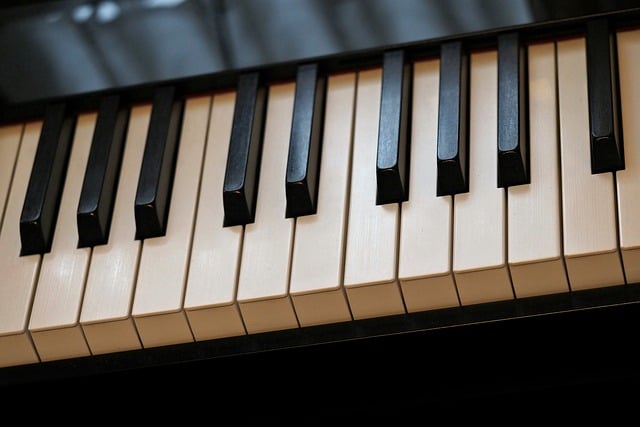
Understanding the Role of the Keyboard in Performance History
The keyboard piano acts as a bridge between compositional design and interpretive expression. From Bach’s contrapuntal clarity to Chopin’s poetic rubato, composers wrote for specific instruments whose mechanics influenced articulation and phrasing. Studying these instruments exposes how earlier musicians conceived touch—lighter, more speech-like—and how composers tailored their writing to those qualities. The historical keyboard thus provides direct insight into the dialogue between instrument and imagination.
The Piano’s Transformation Through Time
The fortepiano and clavichord offered subtle tonal shades that shaped eighteenth-century rhetoric in music. As builders introduced iron frames, felt hammers, and double escapement actions in the nineteenth century, pianists gained wider dynamic control and projection suited to larger concert halls. Comparing these designs shows how expressive ideals shifted from intimacy toward grandeur. Each innovation redefined what pianists could communicate through sound.
Insights from the Historical Keyboard Academy’s June Events
The academy’s June 23–27 program invites audiences into this evolving sound world through live demonstrations and academic exchange. It emphasizes practical engagement with early instruments alongside critical reflection on technique.
Exploring Performance Traditions Through Demonstrations (June 23–27)
Public sessions feature historically informed performances spanning Baroque ornamentation to Romantic phrasing. Faculty artists demonstrate on replicas of period keyboards—fortepianos modeled after Walter or Graf designs—illustrating how mechanical differences affect tempo nuance and pedal use. Listeners experience firsthand how instrument design shapes interpretation choices that written notation alone cannot convey.
Pedagogical Dialogues on Interpretation and Technique
Daily lectures foster discussion among performers and researchers about fingering systems described by C.P.E. Bach or Czerny, pedaling conventions before modern sustain pedals, and temperament variations used across Europe. Participants analyze treatises and annotated scores to refine stylistic awareness. These dialogues highlight that technique is inseparable from historical context; touch is not merely physical but conceptual.
Reconstructing Historical Sound Worlds Through the Keyboard Piano
Recreating past sound ideals demands more than playing old notes—it requires decoding how musicians thought about tone production, ornamentation, and tuning as expressive language.
Articulation, Ornamentation, and Expressive Nuance
Early fingerings encouraged detached articulation that clarified polyphony rather than blending it. Ornamentation functioned as rhetoric: French composers valued grace; Germans sought argument-like precision. Modern pianists rediscover flexibility in tempo through such study, recognizing that rhythmic life often emerged from speech rhythm rather than metronomic pulse.
Tuning Systems and Temperament as Expressive Tools
Before equal temperament standardized pitch relations, each key carried distinct color due to unequal interval spacing. Demonstrations at the academy reveal how meantone or well-tempered tunings alter emotional shading within harmonic progressions. Such awareness transforms performance decisions—modulations feel like emotional journeys rather than neutral transitions.
The Continuing Relevance of Historical Performance for Modern Musicians
Historical performance practice is not antiquarian; it informs contemporary artistry by deepening sensitivity to sound production and stylistic coherence.
Integrating Historical Awareness into Contemporary Practice
Modern pianists who study early techniques gain tools for shaping tone more consciously even on modern grands. Adopting lighter touch or selective pedaling can evoke clarity reminiscent of eighteenth-century aesthetics while retaining modern resonance. Authenticity here means responsiveness rather than imitation.
Expanding Research Horizons Through Collaborative Exploration
The academy promotes collaboration among builders restoring antique mechanisms, performers testing them in concert settings, and scholars interpreting archival evidence. This synergy expands research beyond theory into lived experience. By merging craft with scholarship, the field evolves continuously—a reminder that history itself performs each time a musician presses a key.
FAQ
Q1: What makes the Historical Keyboard Academy’s June events significant?
A: They offer rare access to historically informed performances on replica instruments while fostering scholarly dialogue about interpretation methods rooted in original sources.
Q2: How do early keyboards differ from modern pianos?
A: Early fortepianos had lighter actions and smaller ranges; their design emphasized clarity over volume, influencing phrasing and dynamic contour differently from today’s instruments.
Q3: Why study historical temperaments?
A: Unequal tunings reveal harmonic colors lost in equal temperament systems, enriching understanding of tonal tension in pre-19th-century music.
Q4: Can historical techniques be applied on modern pianos?
A: Yes; adapting articulation styles or pedaling strategies can bring greater transparency and expressiveness even on contemporary concert grands.
Q5: Who benefits most from attending these events?
A: Professional performers, musicologists, educators, and instrument makers seeking deeper insight into performance authenticity benefit through direct engagement with both theory and practice.